Australian Consumer Confidence Falls to 64.1 Following RBA Rate Hike
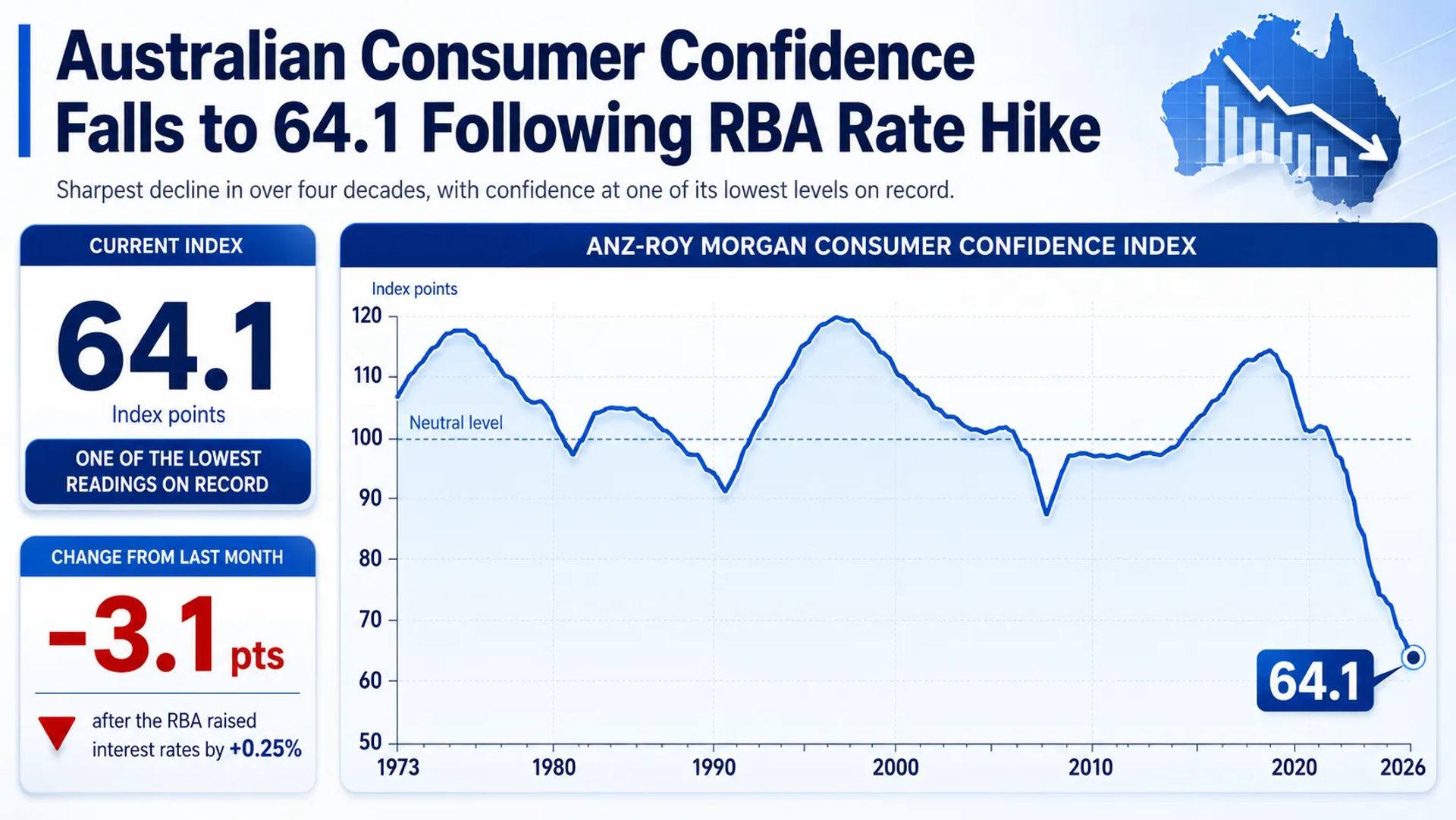
Australian consumer confidence has fallen to its fourth-lowest level since the inception of the tracking index in 1973, as households react to the latest increase in borrowing costs. The ANZ-Roy Morgan Consumer Confidence index declined by 3.1 points to a level of 64.1 for the week ending May 12, 2026. This significant retreat in sentiment follows the Reserve Bank of Australia (RBA) decision on May 5, 2026, to lift the official cash rate by 25 basis points to 4.35%.
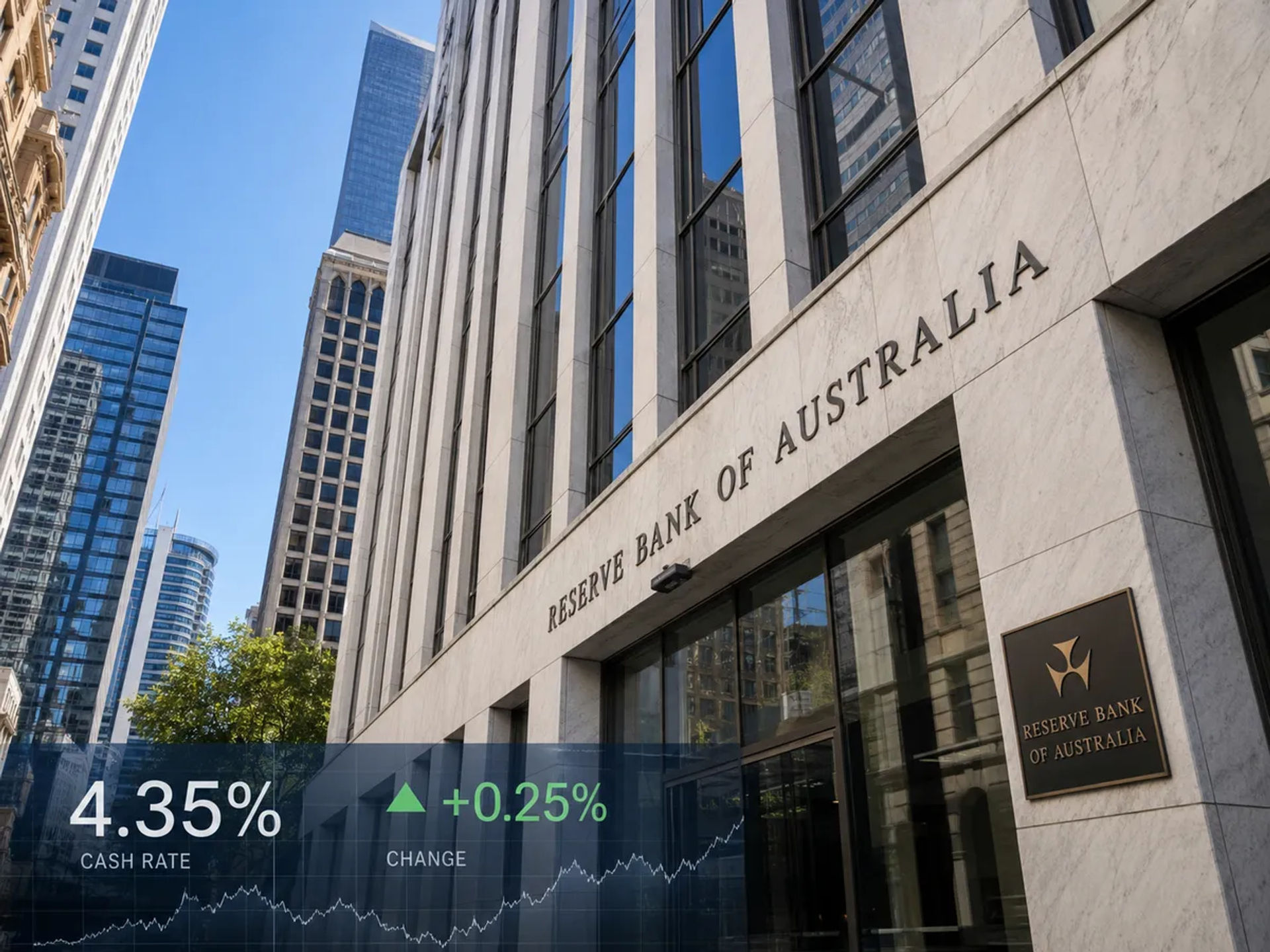
The RBA's move to 4.35% represents the third consecutive rate hike this year, a decision supported by a vote of eight members in favour and one against. This tightening of monetary policy follows a period in the second half of 2025 when underlying inflation picked up materially. The immediate consequence of this latest 0.25% increase has been a sharp contraction in consumer optimism, with the current reading of 64.1 sitting 20.3 points lower than the level of 87.5 recorded during the period of April 28 to May 4, 2025.
Household Financial Pressures and Regional Trends
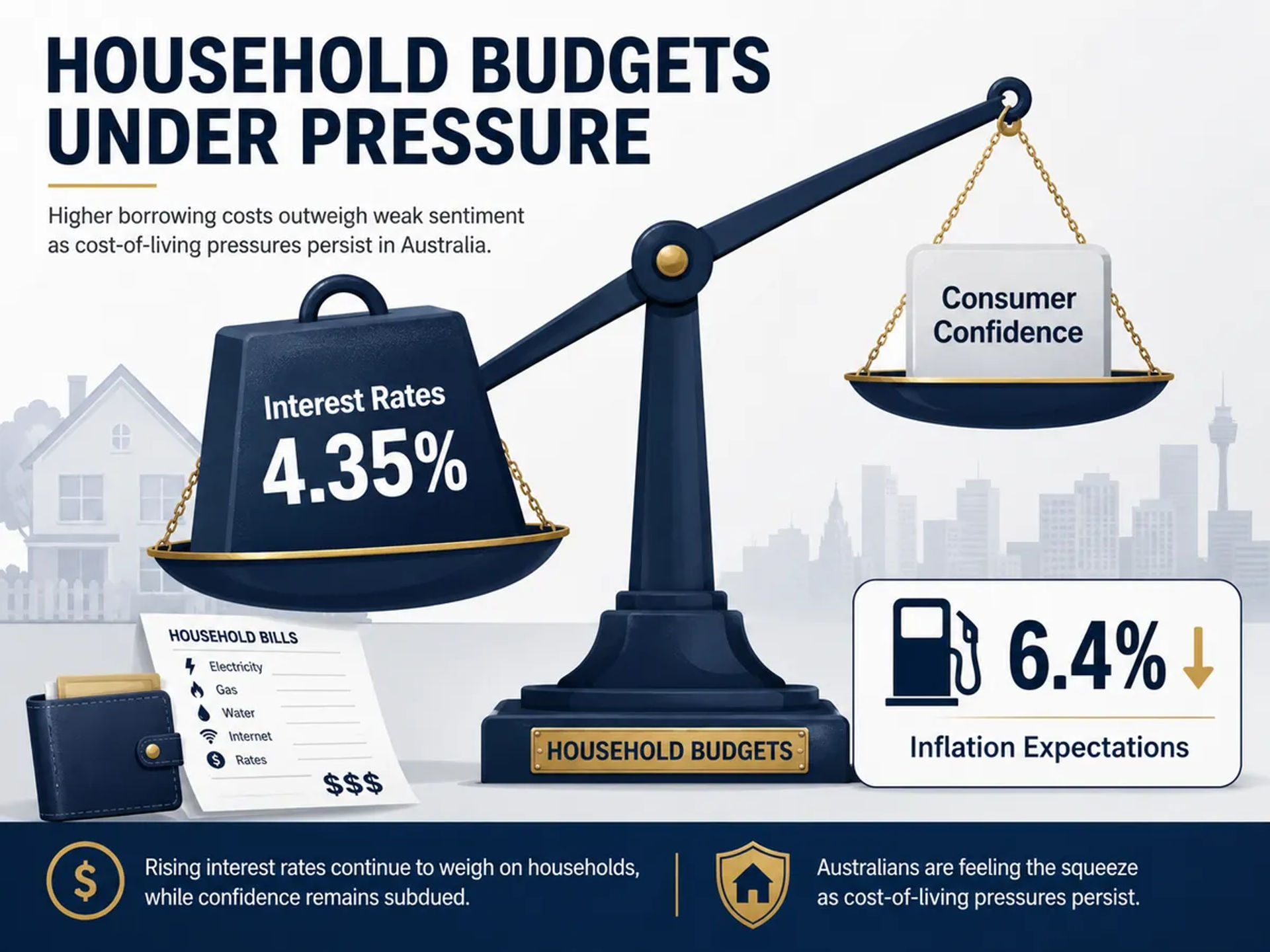
The decline in confidence is visible across almost all components of the survey. There has been a notable and sharp fall in how households perceive their personal finances, indicating a widespread concern regarding the future economic outlook and the immediate impact of higher interest rates on disposable income. This unease regarding Household Budgets suggests that Australians are likely to curb their spending, which could have significant implications for retail activity and overall economic growth in the near term.
Confidence levels decreased across most major states as the impact of the rate hike was felt nationally:
- New South Wales recorded a decline in sentiment.
- Victoria saw a reduction in consumer confidence.
- Queensland experienced a drop in household optimism.
- South Australia reported a decrease in confidence levels.
- Western Australia saw a slight increase, bucking the national trend.
The series remains near its lowest level since its inception in 1973, a trend identified by ANZ Economist Sophia Angala. The persistent nature of this low sentiment reflects a growing unease among households about their financial situation and the broader economic trajectory.
Business Confidence and Inflation Expectations
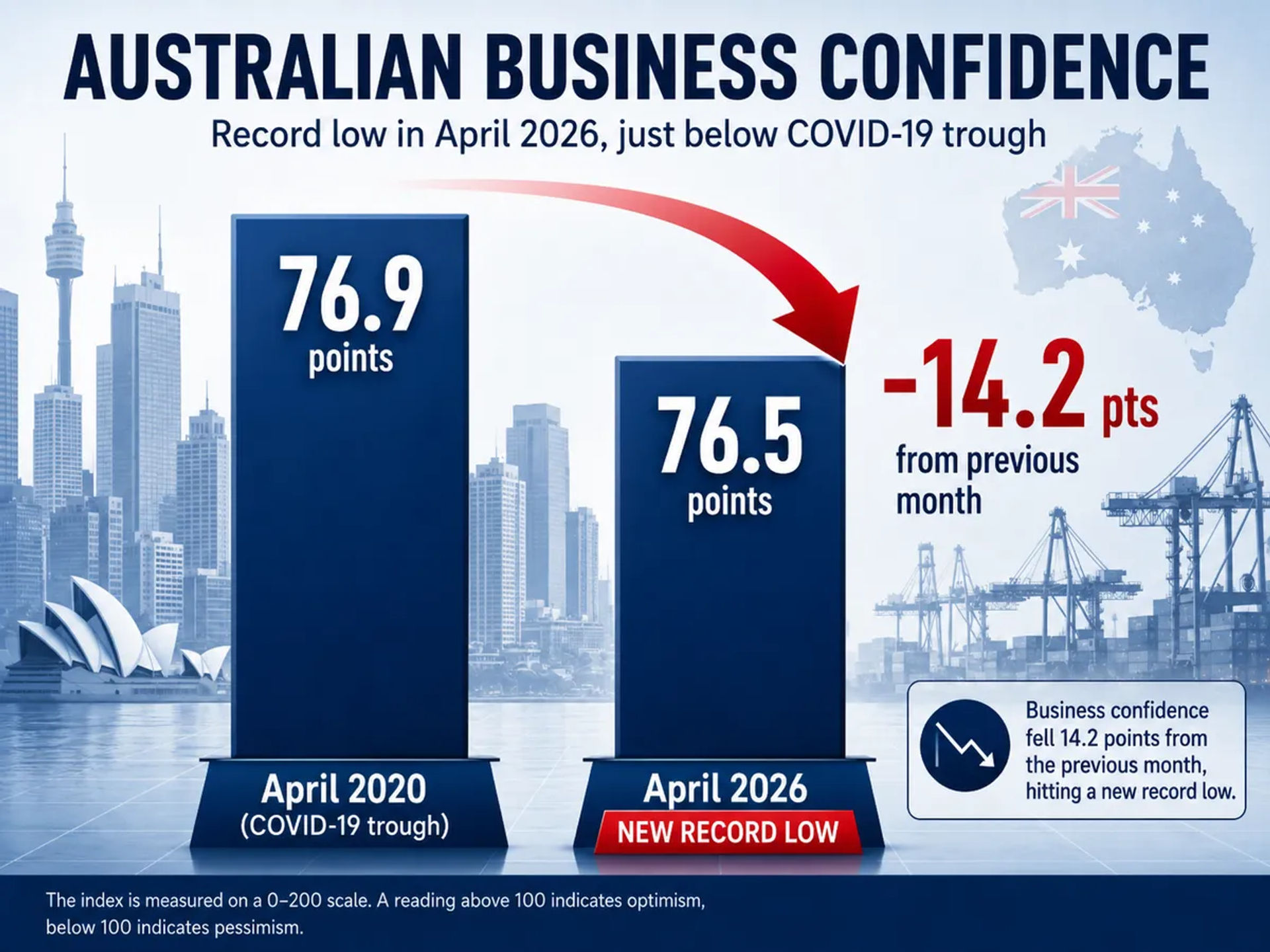
The downturn in consumer sentiment is mirrored by a collapse in business morale. In April 2026, the Business Confidence Index hit a new record low of 76.5 points, representing a month-on-month decrease of 14.2 points. This level is now lower than the previous trough experienced during the onset of the COVID-19 pandemic in April 2020. The record low in business confidence suggests that the private sector is also bracing for a period of subdued demand and economic cooling.
Related Articles

Comments
0Loading...
No comments yet. Be the first to share your thoughts.