Australia Deploying $14.8 Billion Fuel Package as Retail Excise Cut Set to Expire
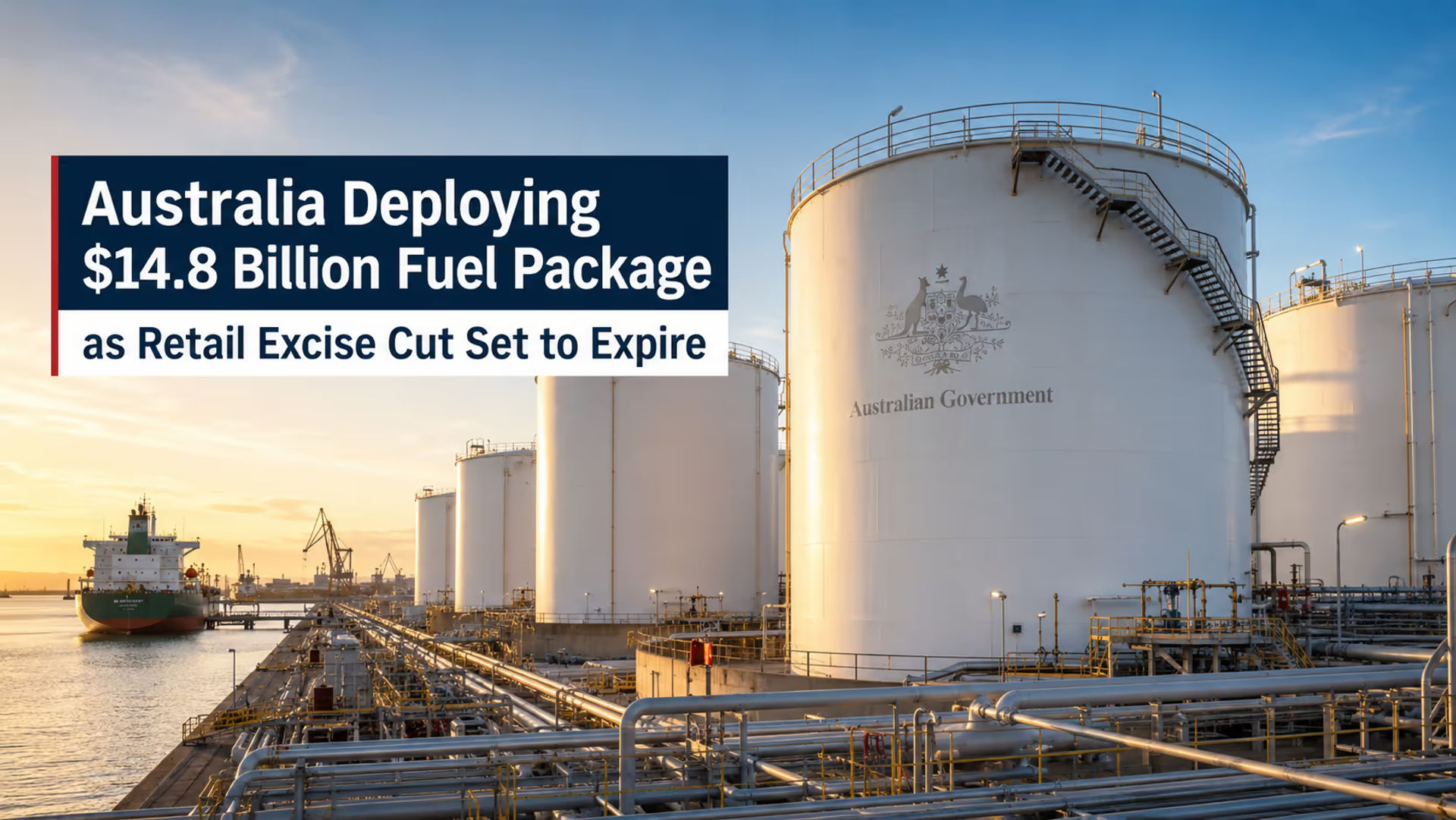
The Australian Government is actively deploying its $14.8 billion Strengthening Australia's Fuel Resilience Package to secure the nation's energy future against global oil market volatility. Announced on May 6, 2026, ahead of the Federal Budget 2026-27, the comprehensive package aims to fortify domestic supply chains and insulate both businesses and consumers from geopolitical shocks, particularly ongoing conflicts in the Middle East. While designed to secure long-term energy independence, the policy arrives alongside major shifts in retail pricing, as a crucial consumer relief measure prepares to expire.
Australia relies deeply on imported liquid fuels, with only about 20% of its supplies coming from domestic refineries. This leaves the domestic economy highly vulnerable to global supply shocks, such as disruptions through the Strait of Hormuz. The comprehensive package represents a direct federal intervention to safeguard the national economy and shield consumers from inflationary impacts driven by unstable global energy markets.
Enhancing Long-Term National Stockpiles
A central pillar of the initiative is the establishment of a permanent, government-owned Australian Fuel Security Reserve, supported by $3.2 billion in direct funding. The reserve is being built with a capacity of approximately one billion litres of diesel and jet fuel. In tandem, the Australian Government is increasing the Minimum Stockholding Obligation for diesel, jet fuel, and petrol by 10 days, targeting a total of 50 days of supply for these critical fuels.

This expansion is designed to address current vulnerabilities in domestic storage. As of June 2, 2026, Australia's domestic fuel reserves stood at 43 days for petrol, 36 days for diesel, and 30 days for jet fuel. Minister for Climate Change and Energy Chris Bowen affirmed the progress of these stockholding measures during the Australian Energy Council Conference 2026 on June 4, 2026, noting the improved national position.
Australia has more fuel across all major types than on February 28, 2026, when conflict intensified in the Middle East.
The policy framework was earlier endorsed by the National Cabinet on March 30, 2026, as part of the National Fuel Security Plan, establishing a coordinated federal and state approach to supply management.
Fuel and Fertiliser Security Facility
To support fuel imports, storage, and supply networks, the government has established the $7.5 billion Fuel and Fertiliser Security Facility. Operating through financial mechanisms such as loans, guarantees, and insurance, the facility works alongside Export Finance Australia and the National Reconstruction Fund to keep supply channels open.

Related Articles

Middle East Conflict Impacts New Zealand Fuel Prices and Economic Outlook
New Zealand officials are monitoring fuel supplies as petrol prices rise 33.6% and diesel 94.9% following conflict in the Middle East. Global oil prices hit US$102.40 per barrel as supply chain risks grow.

Comments
0Loading...
No comments yet. Be the first to share your thoughts.