
Australia's Build-to-Rent Sector Accelerates with Large Pipeline Expansion
The Australian build-to-rent (BTR) sector has reached a critical turning point as institutional investment accelerates to address the nation's severe housing supply challenges. Nationally, more than 18,000 completed BTR units are now fully operational, providing a solid foundation for an asset class that is rapidly scaling. This existing stock represents only the beginning of a broader structural transformation, with Australia's potential total BTR supply now poised to exceed 60,000 units if all projects currently in planning or under construction are successfully delivered. This pipeline represents a more than threefold increase in national stock, signalling strong confidence from domestic and international capital.
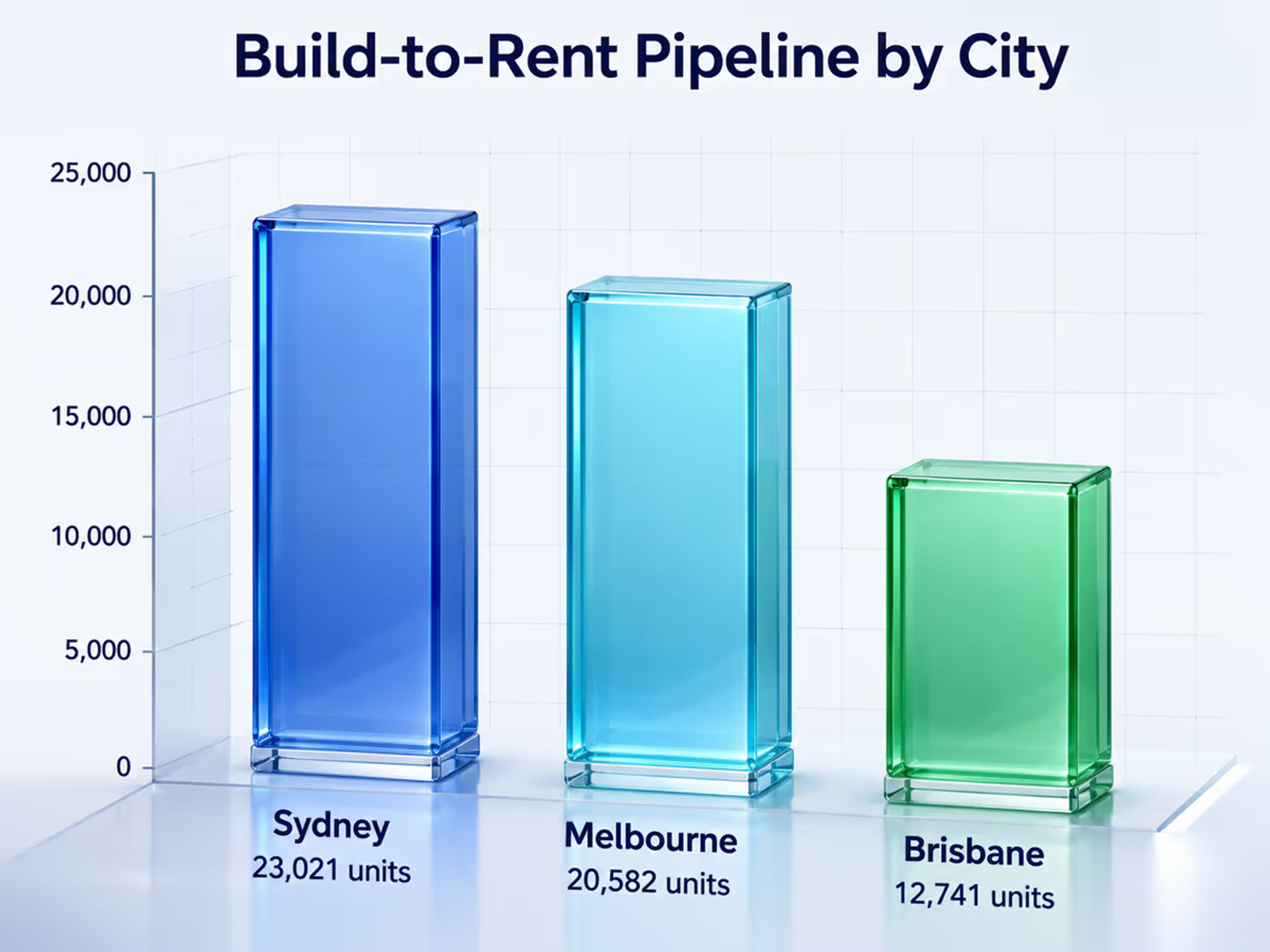
This massive wave of development is directly targeting structural supply deficits across Australia's major metropolitan centres. The momentum is particularly evident in a major shift in geographical dominance, with New South Wales overtaking Victoria as the primary hub for planned developments. Sydney now leads the national BTR pipeline with 23,021 units currently under construction or in planning. This surge places the New South Wales capital ahead of Melbourne, which follows with 20,582 units in its active pipeline. Meanwhile, Brisbane is establishing a significant presence of its own, contributing 12,741 units to the national pipeline.
Pipeline Valuation and Industry Growth
The rapid scaling of the sector is reflected in its surging financial valuation. The national BTR pipeline stands at 51,000 apartments with a total estimated value of $40.1 billion as of Q1 2026. This represents a 30% increase in the number of units and a 33% increase in total pipeline value compared to the same period in the previous year. This high-density residential pipeline is being supported by major property organisations and developers, including Mirvac, which are actively delivering large-scale projects to meet the needs of long-term renters.
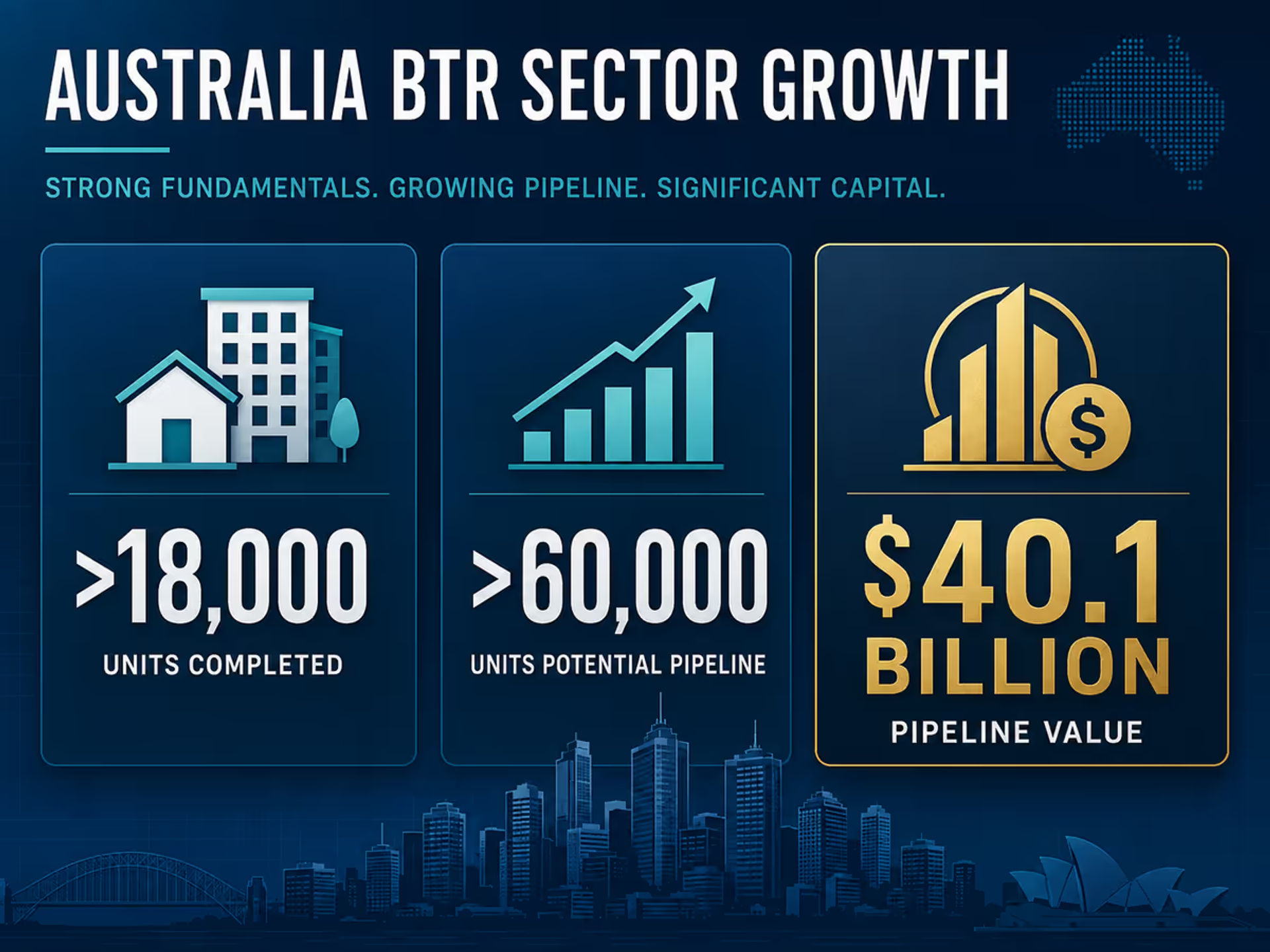
While BTR currently represents less than 1% of Australia's total apartment market, long-term projections suggest the sector could expand to comprise 10% of the market—representing approximately 250,000 apartments—by 2050. This growth is being facilitated by specialised real estate and advisory firms such as Charter Keck Cramer, BDO Australia, Franklin St., Colliers, and Knight Frank, which are actively structuring transactions and advising on capital deployment. The broader commercial landscape also includes contributions from entities like Qaive and Tulipwood as institutional capital continues to seek stable residential yields.
Federal and State Policy Incentives
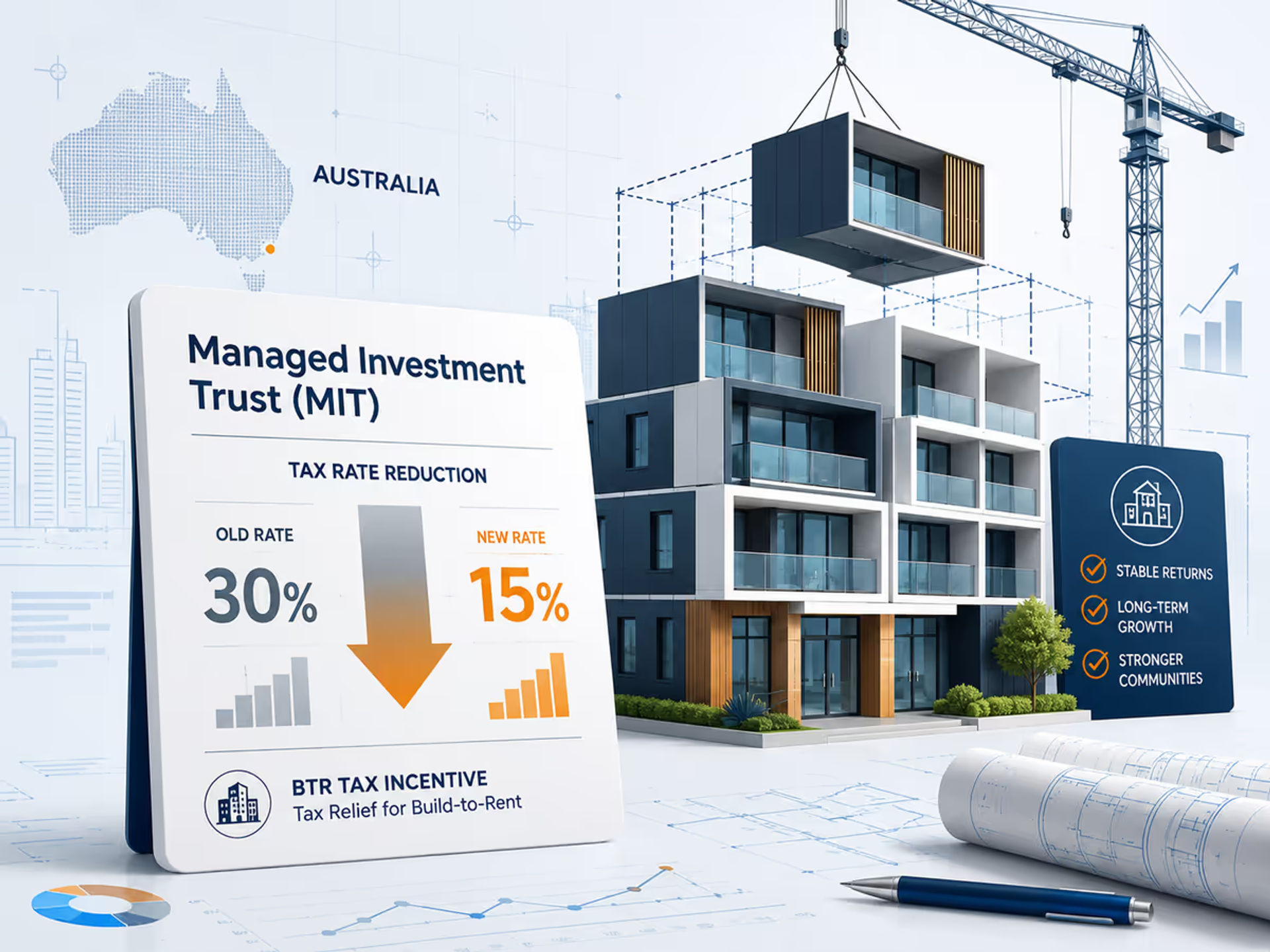
The acceleration of the BTR pipeline has been heavily supported by coordinated policy interventions at both federal and state levels. A key catalyst occurred in 2023 when the Australian Federal Government reduced the Managed Investment Trust (MIT) withholding tax rate for BTR projects from 30% to 15%. This change was paired with an increase in the capital works deduction rate from 2.5% to 4% for eligible build-to-rent developments. These changes substantially improved the feasibility of large-scale residential projects for foreign institutional investors, who typically require stable, long-term yields.
Related Articles


Comments
0Loading...
No comments yet. Be the first to share your thoughts.
