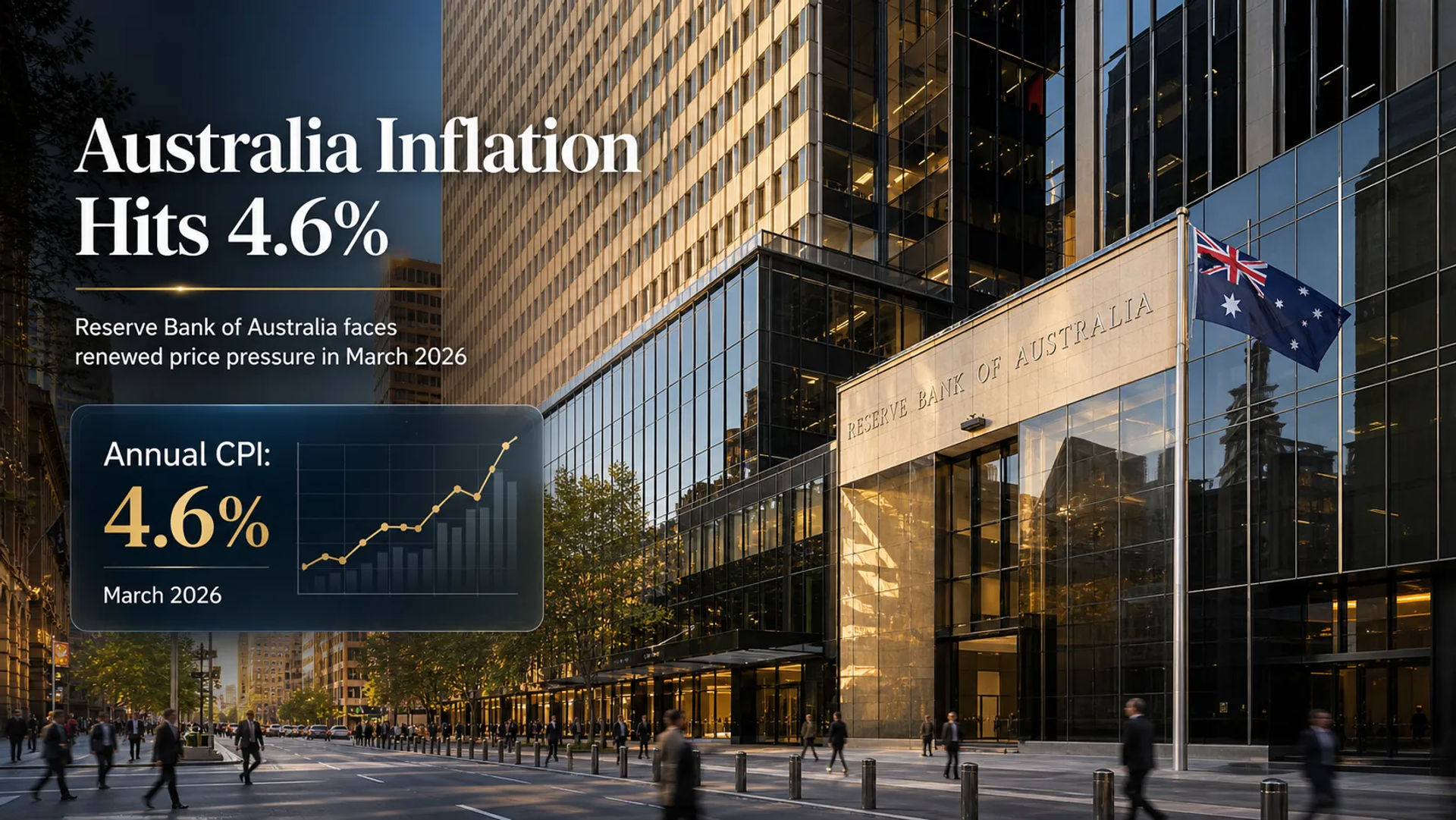
Australian Annual CPI Jumps to 4.6% in March, Intensifying RBA Rate Hike Pressure
Australia’s headline inflation rate accelerated sharply in March 2026, reaching its highest level in over two years and placing significant pressure on the Reserve Bank of Australia (RBA) to resume its monetary tightening cycle. Data released by the Australian Bureau of Statistics (ABS) on April 29 shows the annual Consumer Price Index (CPI) rose to 4.6%, up from 3.7% in February.
The result marks the highest annual inflation reading since September 2023 and represents a significant breach of the RBA’s target band of 2% to 3%. While a variety of domestic factors contributed to the result, the primary catalyst for the monthly jump was a historic surge in automotive fuel prices, directly linked to escalating geopolitical conflict in the Middle East.
The Impact of the 2026 Iran War
The spike in headline inflation follows the outbreak of the 2026 Iran war, which began on February 28 with coordinated strikes by the United States and Israel. The conflict immediately destabilised global energy markets. On March 2, Brent crude oil prices rose to the $80-$82 per barrel range, but the situation worsened significantly on March 4 when Iran closed the Strait of Hormuz—a critical chokepoint for global oil transit. Following the closure, Brent crude surged past $120 per barrel.

These global events translated into immediate pain at Australian pumps. The ABS reported that automotive fuel prices increased by 32.8% between February and March 2026, the largest monthly rise since the current data series began in 2017. The price of regular unleaded petrol rose from an average of 171 cents per litre in February to 228 cents per litre in March. Diesel prices saw an even steeper climb, moving from 181 cents to 256 cents per litre over the same period.

Housing and Core Inflation Remain Elevated
While fuel was the most volatile component of the March data, underlying inflationary pressures remain stubborn. The trimmed mean CPI—the RBA’s preferred measure of core inflation which filters out extreme price moves—held steady at 3.3% year-on-year in March, unchanged from the February figure. This indicates that even without the energy shock, inflation remains above the central bank's target range.
Housing remains the largest structural contributor to annual inflation, rising by 6.5% in the 12 months to March. This sector continues to be impacted by high construction costs and a persistent shortage of rental stock across major capital cities. The combination of high energy costs and sustained housing inflation presents a complex challenge for policymakers attempting to anchor inflation expectations without triggering a severe economic downturn.
Market Expectations and the RBA Dilemma
The Reserve Bank of Australia, which increased the cash rate target by 25 basis points to 4.10% on March 17, now faces intense pressure to act again. As of April 28, the ASX 30 Day Interbank Cash Rate Futures indicated a 76% probability that the RBA Board will raise the cash rate to 4.35% at its upcoming meeting on May 5, 2026.
Related Articles

Comments
0Loading...
No comments yet. Be the first to share your thoughts.

