
Australia Integrates Digital Asset Platforms into Financial Services Licensing Framework
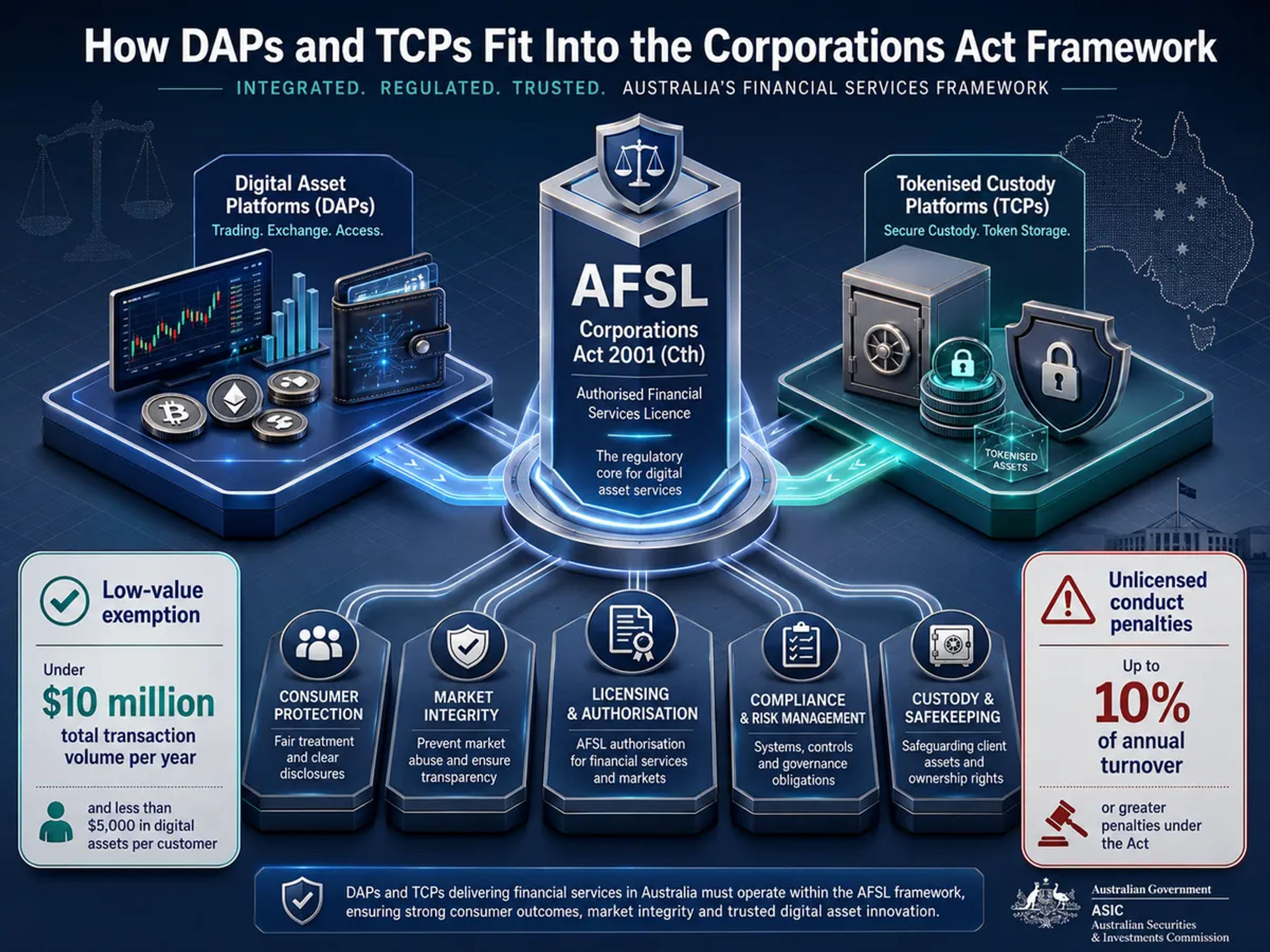
Australia has formalised a landmark shift in its financial regulatory landscape with the enactment of the Corporations Amendment (Digital Assets Framework) Act 2026. The legislation, which received Royal Assent on April 8, 2026, establishes a comprehensive legal structure for the digital asset sector by integrating platforms and custodians into the existing Australian Financial Services Licence (AFSL) regime. This move effectively ends a period of regulatory ambiguity for the industry, bringing digital asset providers under the same consumer protection and market integrity standards as traditional financial institutions.
The new framework introduces two primary categories of financial products that will now require an AFSL: Digital Asset Platforms (DAPs) and Tokenised Custody Platforms (TCPs). By categorising these entities as financial services providers under the Corporations Act 2001 (Cth), the government aims to enhance market transparency and provide greater certainty for both investors and operators. The Treasury has estimated that the implementation of this clear regulatory path could result in productivity and cost savings of up to $24 billion annually for the Australian economy.

Implementation Roadmap and Compliance Deadlines
Following the passage of the Act, the Australian Securities and Investments Commission (ASIC) has taken immediate steps to guide the industry through the transition. On April 20, 2026, the regulator released an 18-month roadmap detailing the phased implementation of the new regime. This roadmap includes extensive consultation periods regarding new operational standards and specific guidance for platform operators.
A critical milestone for existing operators is fast approaching. On May 4, 2026, ASIC issued a formal reminder to digital asset businesses regarding the expiration of its current 'no-action' position. Entities that are currently operating without an AFSL must apply for a licence or a variation to their existing licence by June 30, 2026. Failure to meet this deadline could leave businesses exposed to enforcement action once the current discretionary period expires.

While the Act received Royal Assent in early 2026, its official commencement date is set for April 9, 2027. This timeline provides the industry with a significant lead-up to adjust to the new requirements. Following the commencement, a six-month transition period will be in effect, concluding on October 9, 2027. During this window, businesses that have submitted a valid AFSL application will be permitted to continue their operations while their submissions are processed by the regulator.
Industry Impact and Regulatory Requirements
The reforms have drawn significant attention from major industry participants and legal advisors. Global exchanges such as OKX Australia and Coinbase, alongside advocacy groups like Stand with Crypto Australia, are now navigating the complexities of the new licensing requirements. Law firms including Dentons, Adria Group, Gilbert + Tobin, Piper Alderman, and Bright Law are actively advising clients on the transition from the previous unregulated environment to the rigorous AFSL standards.
Related Articles

Comments
0Loading...
No comments yet. Be the first to share your thoughts.