Australian Federal Budget 2026-27 Unveils Major Tax and Spending Package
Treasurer Jim Chalmers delivered the Albanese Government's fifth Federal Budget on May 12, 2026, introducing a sweeping suite of tax reforms and spending measures designed to address intergenerational equity and housing affordability. The 2026-27 Federal Budget forecasts a deficit of $31.5 billion, representing a $2.8 billion improvement over the previous year's estimate. Central to the package is a significant restructuring of property and investment taxation, alongside targeted relief for workers and small businesses amidst a backdrop of elevated inflation and a global oil crisis.

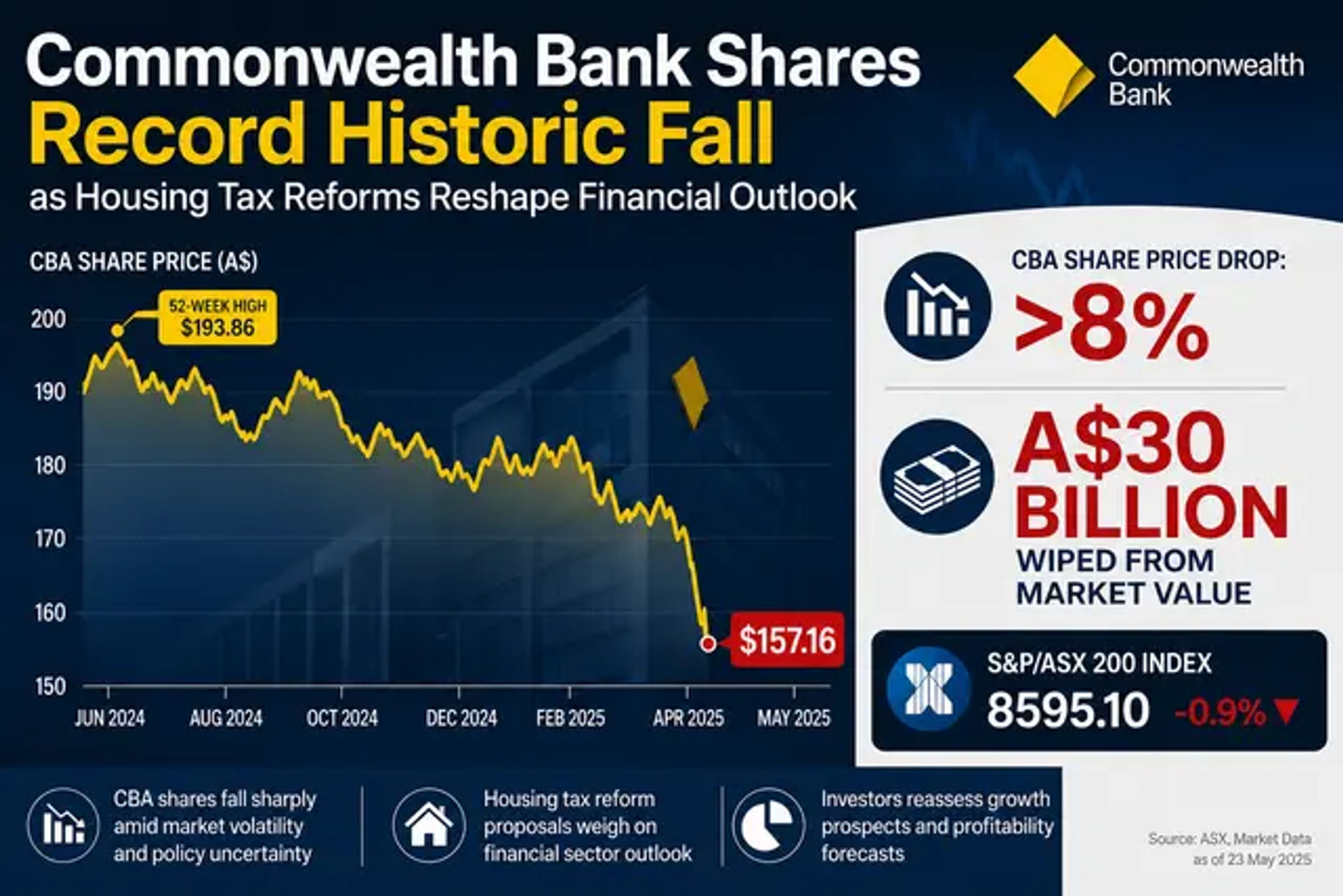
The centrepiece of the government's reform agenda involves substantial changes to negative gearing and capital gains tax (CGT) arrangements. From July 1, 2027, negative gearing will be restricted to newly constructed residential properties. This policy shift aims to incentivise the supply of new housing rather than the turnover of existing stock. To provide certainty for current investors, properties purchased before 7:30 PM AEST on May 12, 2026, will be exempt from these changes under grandfathering provisions.
Simultaneously, the government will replace the existing 50% capital gains tax discount with an inflation-indexed method and a 30% minimum tax on net capital gains. This change, also effective from July 1, 2027, applies to assets held for more than 12 months. Further tightening the tax system, a new 30% minimum tax on the taxable income of discretionary trusts will be introduced from July 1, 2028. While this measure includes exceptions for primary production income and specific trust types, the combined revenue from the CGT, negative gearing, and trust reforms is projected to reach almost $7 billion by 2029-30.

To balance these structural reforms, the budget includes immediate and medium-term relief for individual taxpayers. A new $1,000 instant tax deduction for work-related expenses will be available to Australian tax residents starting from the 2026-27 income year. This measure is intended to simplify compliance for workers whose annual claims fall below this threshold. Additionally, the Working Australians Tax Offset (WATO) will be introduced from the 2027-28 income year. The WATO will provide an annual tax cut of up to $250 for over 13 million workers, effectively increasing the tax-free threshold by $1,800 to a new level of $19,985. The budgetary cost of the WATO is estimated at over $3 billion per year.

Housing remains a primary focus of the government's expenditure, with an additional $2 billion investment over four years dedicated to critical infrastructure. This funding is designed to support the construction of up to 65,000 new homes, bringing the total housing-enabling infrastructure investment to . Despite these efforts to boost supply, the projects that the shift in investor behaviour resulting from tax changes may lead to 35,000 fewer homes being built over the next decade. However, the government anticipates the reforms will assist 75,000 Australians in transitioning into home ownership.
Related Articles


Comments
0Loading...
No comments yet. Be the first to share your thoughts.