FMA and Westpac NZ Issue Urgent Warning Over Surge in Deepfake Social Media Scams
The Financial Markets Authority (FMA) and Westpac NZ have issued an urgent coordinated warning regarding a significant surge in sophisticated deepfake investment scams proliferating across social media platforms. The alert, released in late April 2026, highlights a growing trend where artificial intelligence is used to impersonate prominent New Zealand political and business leaders to defraud investors.
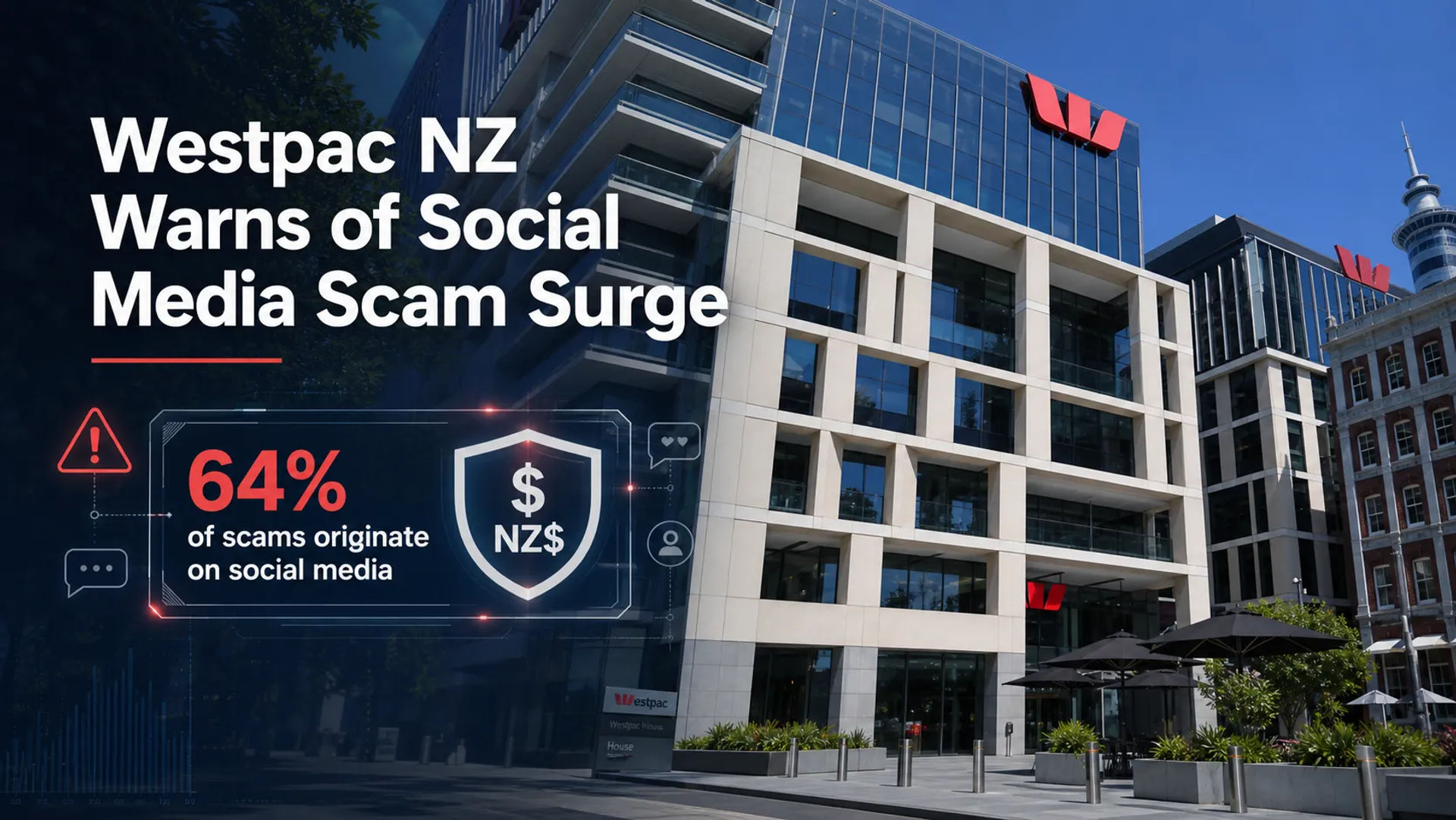
According to data released by Westpac NZ, social media has become the primary breeding ground for financial fraud. The bank reported that 64% of all scam cases it has handled so far in 2026 originated on social media platforms, a notable increase from 57% during the same period in 2025. The FMA’s internal monitoring recently identified 110 unique scam advertisements on Meta-owned platforms—including Facebook and Instagram—within a single 24-hour window.

High-Profile Figures Targeted by AI
These scams utilize highly convincing AI-generated images and videos, known as deepfakes, to create the illusion of legitimate endorsements. Scammers have targeted the likenesses of Westpac NZ CEO Catherine McGrath, NZ First leader Winston Peters, Kiwibank CEO Steve Jurkovich, and Prime Minister Christopher Luxon.
The fraudulent content typically depicts these figures promoting high-yield cryptocurrency schemes or "revolutionary" trading platforms. To further enhance credibility, the advertisements often link to fake news articles that mimic the branding and layout of trusted New Zealand media outlets, including RNZ, TVNZ, and the NZ Herald.
Westpac NZ CEO Catherine McGrath, who has herself been a target of these deepfakes, recently criticized the slow response from social media giant Meta. McGrath noted that reported scam advertisements often remain active for weeks after being flagged by the bank’s security teams. In one specific instance in April 2026, a deepfake featuring both McGrath and Winston Peters continued to circulate despite multiple takedown requests.
The Human and Financial Cost
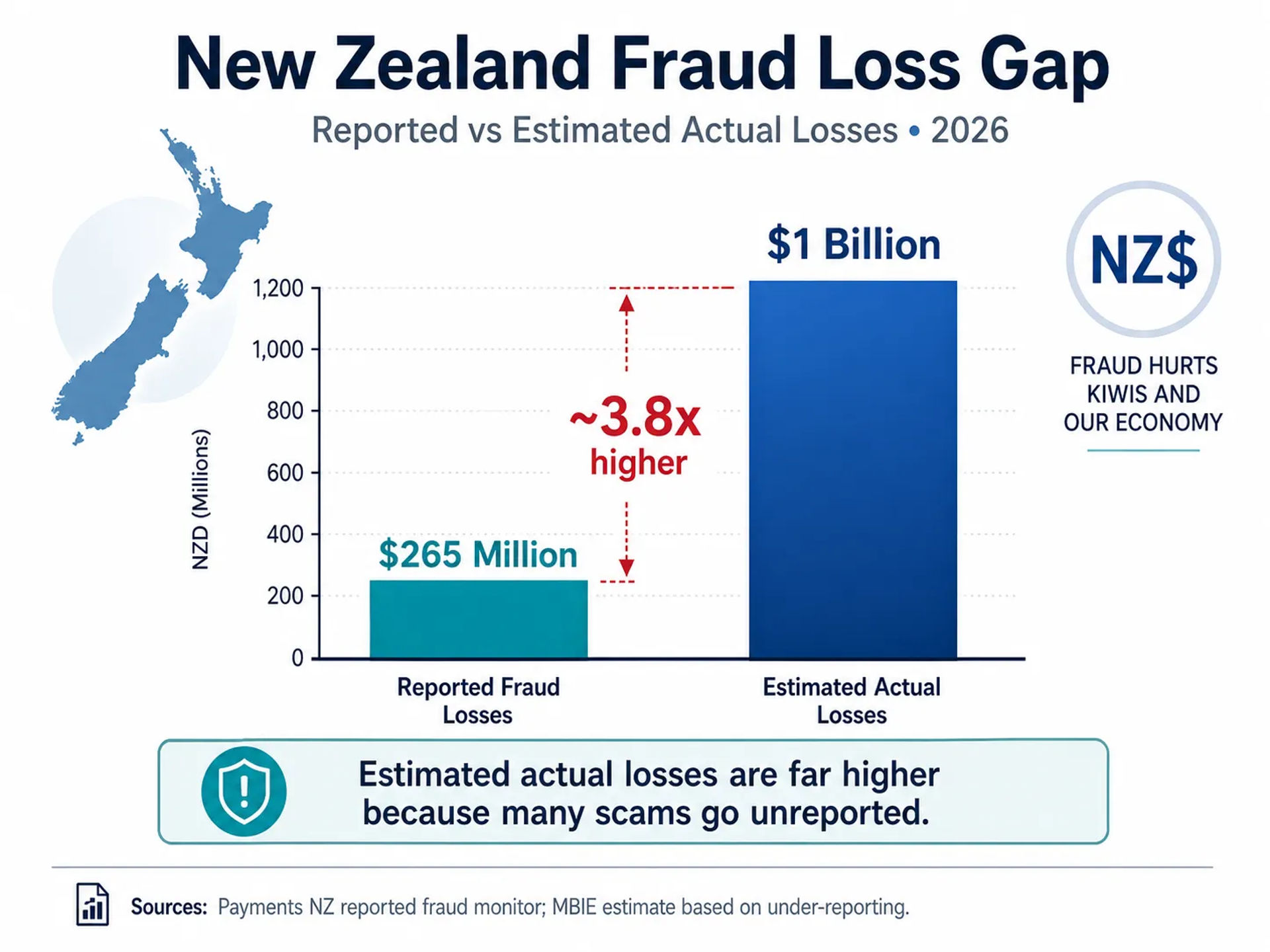
The financial impact of these operations is severe. While official figures from the Ministry of Business, Innovation and Employment (MBIE) indicate that reported annual fraud losses in New Zealand reached NZD 265 million, authorities believe the true figure is significantly higher. Due to an estimated 80% underreporting rate, actual losses are projected to be closer to NZD 1 billion annually.
The human cost was underscored by a landmark case in 2024, where a Taranaki grandmother lost $224,000 after falling victim to a deepfake video of Prime Minister Christopher Luxon. The video, which appeared on Facebook, successfully convinced the victim that the government was backing a specific cryptocurrency investment.
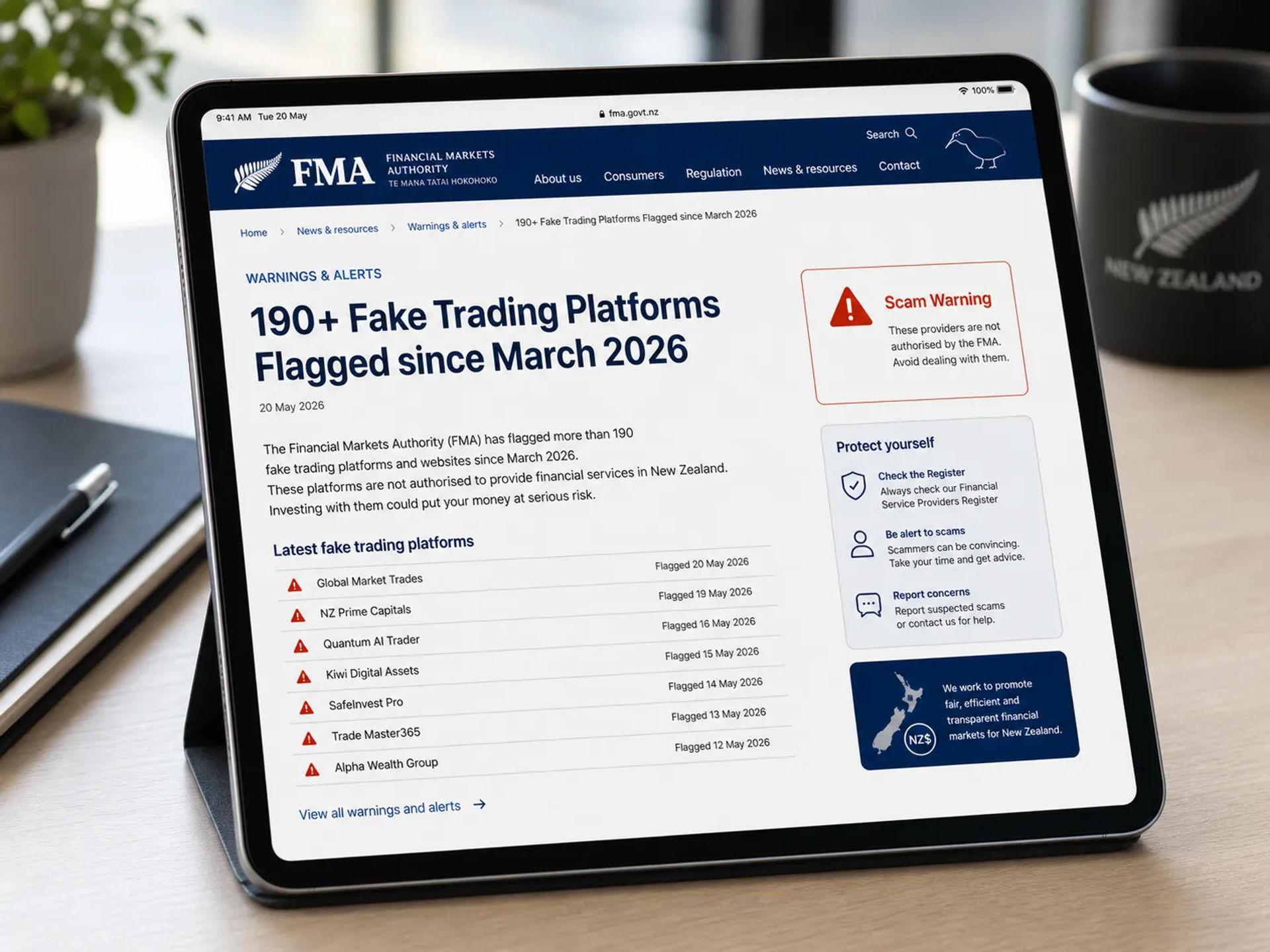
Since the start of March 2026, the FMA has flagged over 190 fraudulent trading websites for removal. However, the regulator describes the process as a "cat and mouse game," as scammers can deploy new domains almost as quickly as old ones are shuttered.
Regulatory Pressure and Platform Accountability
The escalating crisis has renewed calls for social media platforms to take greater responsibility for the content they host and profit from through advertising revenue. The FMA first warned of these tactics in August 2024, but the sophistication of the technology has evolved rapidly. By December 2025, the regulator noted a sharp rise in "pump-and-dump" scams utilizing deepfake technology to manipulate micro-cap stocks and crypto assets.
Related Articles


Comments
0Loading...
No comments yet. Be the first to share your thoughts.