New Zealand Returns to Trade Surplus in March as Exports Hit Record High
New Zealand recorded a merchandise trade surplus of NZD 0.70 billion in March 2026, representing a significant shift in the nation's external trade balance. This result marks a substantial improvement from the NZD 0.79 billion trade deficit observed in March 2025 and represents the first monthly trade surplus for the country since December 2025. The performance in March 2026 also exceeded market expectations, as forecasts had anticipated a much smaller surplus of NZD 0.18 billion.
The return to a surplus was underpinned by a surge in total goods exports, which reached a record high of NZD 7.9 billion for the month. This figure reflects a 7.3% year-on-year increase. While exports saw robust growth, the import sector also remained active, with goods imports rising by 9.6% over the same period to reach NZD 7.2 billion. This growth in both directions suggests a resilient trade environment, even as the economy naviagtes rising costs and shifting international demand.
Drivers of Export Performance
The record-breaking export total in March 2026 was largely driven by specific commodity groups that saw exceptional growth. The category of precious metals, jewellery, and coins emerged as a primary contributor, recording a 166% increase compared to the previous year. This surge added NZD 166 million to the export total. Analysts at Commerzbank have noted that such surges in high-value commodities often provide a significant buffer for the trade balance during periods of global volatility.

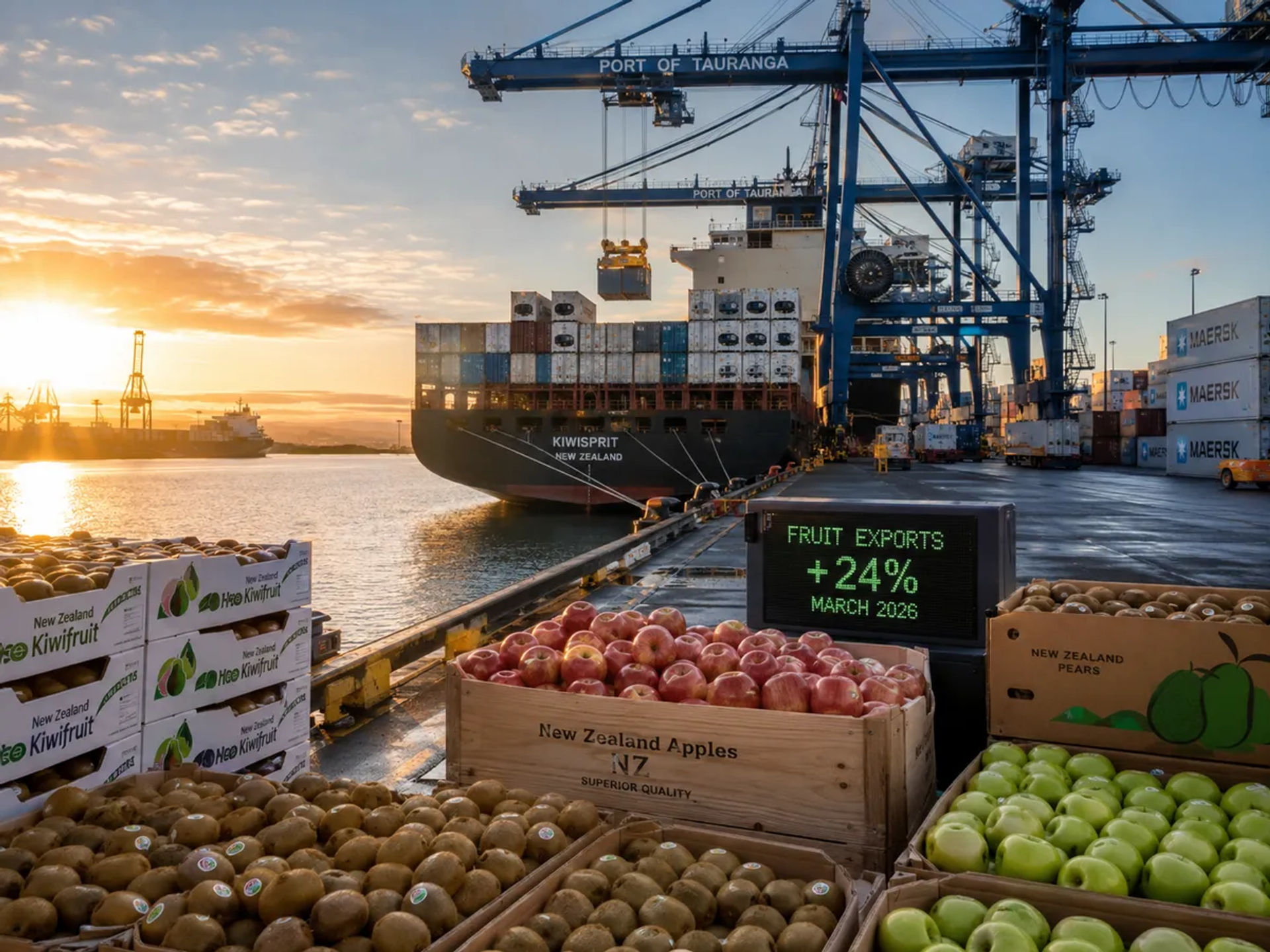
The agricultural sector also provided a significant boost, particularly through fruit exports. This category saw a 24% increase, contributing an additional NZD 149 million to the monthly figures. These gains in high-value commodities and primary produce have been central to the recovery of the trade balance following the NZD 257 million trade deficit recorded in February 2026.
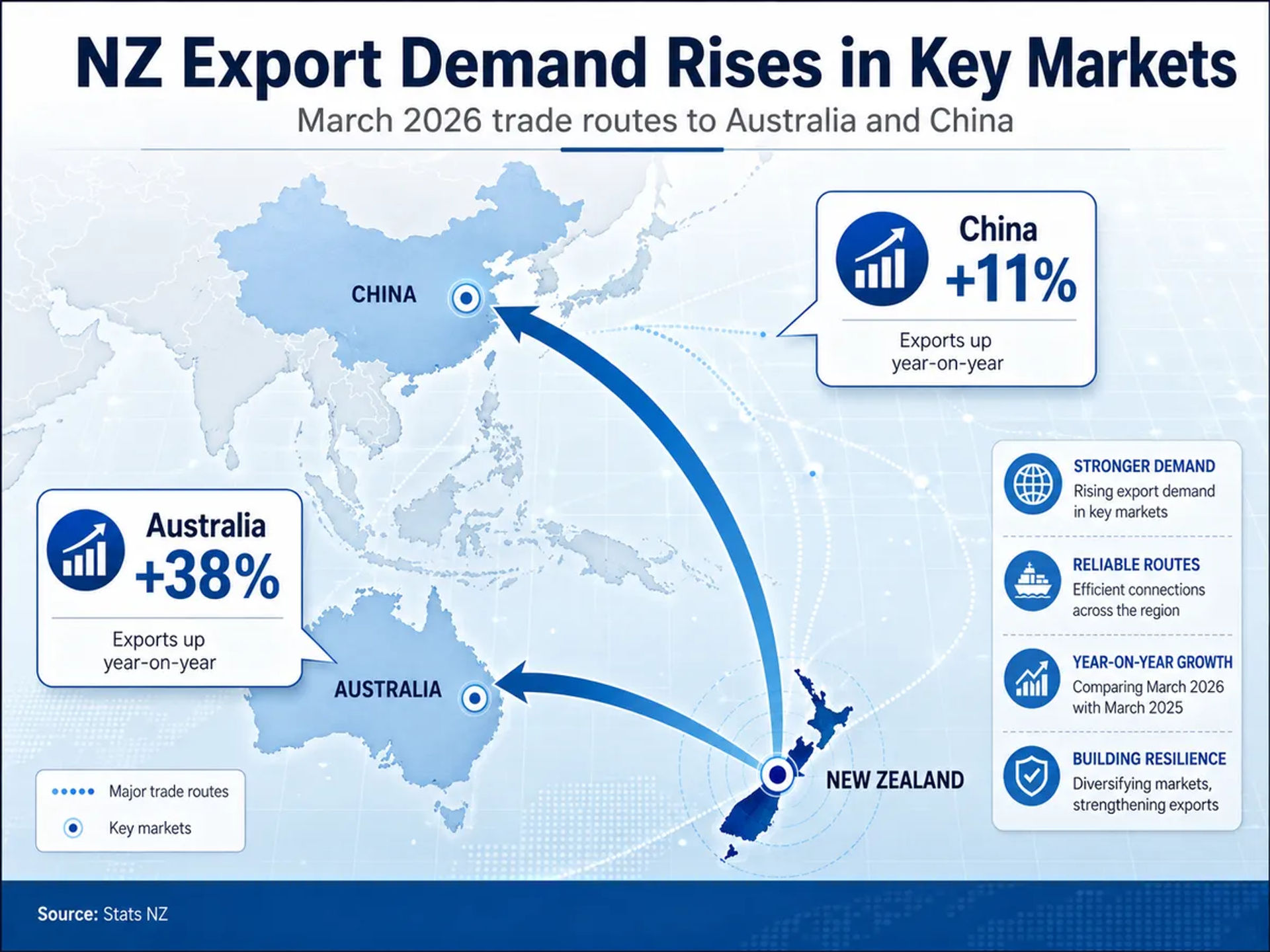
Geographically, New Zealand's trade relationships showed varying degrees of strength. Exports to Australia climbed by 38%, while exports to China saw an 11% increase. These figures highlight the continued importance of regional partners in sustaining New Zealand's export-led growth and the ability of local producers to find demand in key international markets.
Import Trends and Quarterly Outlook
Despite the positive trade balance, the cost of bringing goods into the country has continued to rise. The 9.6% year-on-year increase in imports to reflects these ongoing cost pressures and resilient domestic demand for international goods. While the March 2026 surplus is a positive development, the broader quarterly picture remains more complex. For the first quarter of 2026, New Zealand recorded a total trade deficit of , illustrating that the strong March performance was necessary to offset earlier shortfalls in the period.
Related Articles

Westpac Releases Downbeat June 2026 Consumer Update Highlighting Spending Slowdown and OCR Hikes
Westpac New Zealand's June 2026 Consumer Update shows household spending has slowed sharply, with per-person retail card spending down by 0.3% in May, prompting forecasts of three RBNZ OCR hikes to combat persistent inflation.

Comments
0Loading...
No comments yet. Be the first to share your thoughts.