
New Zealand Budget 2026 Delivers $7 Billion Capital Investment Boost for Infrastructure
The New Zealand Government has unveiled its Budget 2026, delivering a $7 billion capital investment package designed to strengthen the nation's critical infrastructure. Announced on May 28, 2026 by Finance Minister Nicola Willis, the package carries a net capital impact of $5.7 billion after accounting for targeted savings. The substantial capital injection is aimed at bolstering hospitals, schools, roads, rail, and social housing projects, supporting thousands of jobs across the country while enhancing long-term national economic resilience.

The release of the budget follows a sequenced rollout that began with the release of the Budget Policy Statement 2026 on December 16, 2025, followed by Prime Minister Christopher Luxon's pre-Budget speech on May 13, 2026, which signalled a focus on structural investment and fiscal repair. This capital programme is set against a challenging macroeconomic environment characterised by persistent inflation and downgraded growth projections, requiring the government to balance infrastructure expansion with disciplined fiscal management.
Key Infrastructure and Sector Allocations
Health and transport form the dual pillars of the newly announced capital programme. The government has allocated capital spending for the health system of over $680 million, supporting a range of regional and metropolitan healthcare facilities. This funding includes the construction of a new 158-bed ward tower at Whangārei Hospital, as well as redevelopment design work for hospitals in Tauranga, Hawke's Bay, and Palmerston North. Additionally, land acquisition is planned for a new hospital located south of Auckland. Overall health spending for the 2026/27 financial year is set at $34.2 billion.

Transport infrastructure receives a massive funding boost to improve national connectivity. This includes an investment for the Waikato Expressway extension of $1.773 billion, specifically targeting the Cambridge to Piarere Road of National Significance. To support the national logistics network, the government has made a commitment for KiwiRail network investments between 2027-2030 of up to $1.075 billion, alongside $106.9 million allocated for metropolitan rail infrastructure renewals. To address weather-related vulnerabilities across the national roading network, $400 million has been earmarked for state highway resilience projects. Total transport spending is recorded at $477 million.
Social housing and community development also see targeted funding. An investment in social housing of nearly $70 million will fund between 1800-2250 new social homes over three years starting from 2028-29. Total social housing and welfare spending is set at $824 million, with general housing initiatives spending allocated at $430 million. Beyond these areas, the budget outlines more than $2.1 billion for education spending over four years, $1.1 billion for defence and intelligence, and $1 billion for law and order.
Economic Projections and Fiscal Strategy
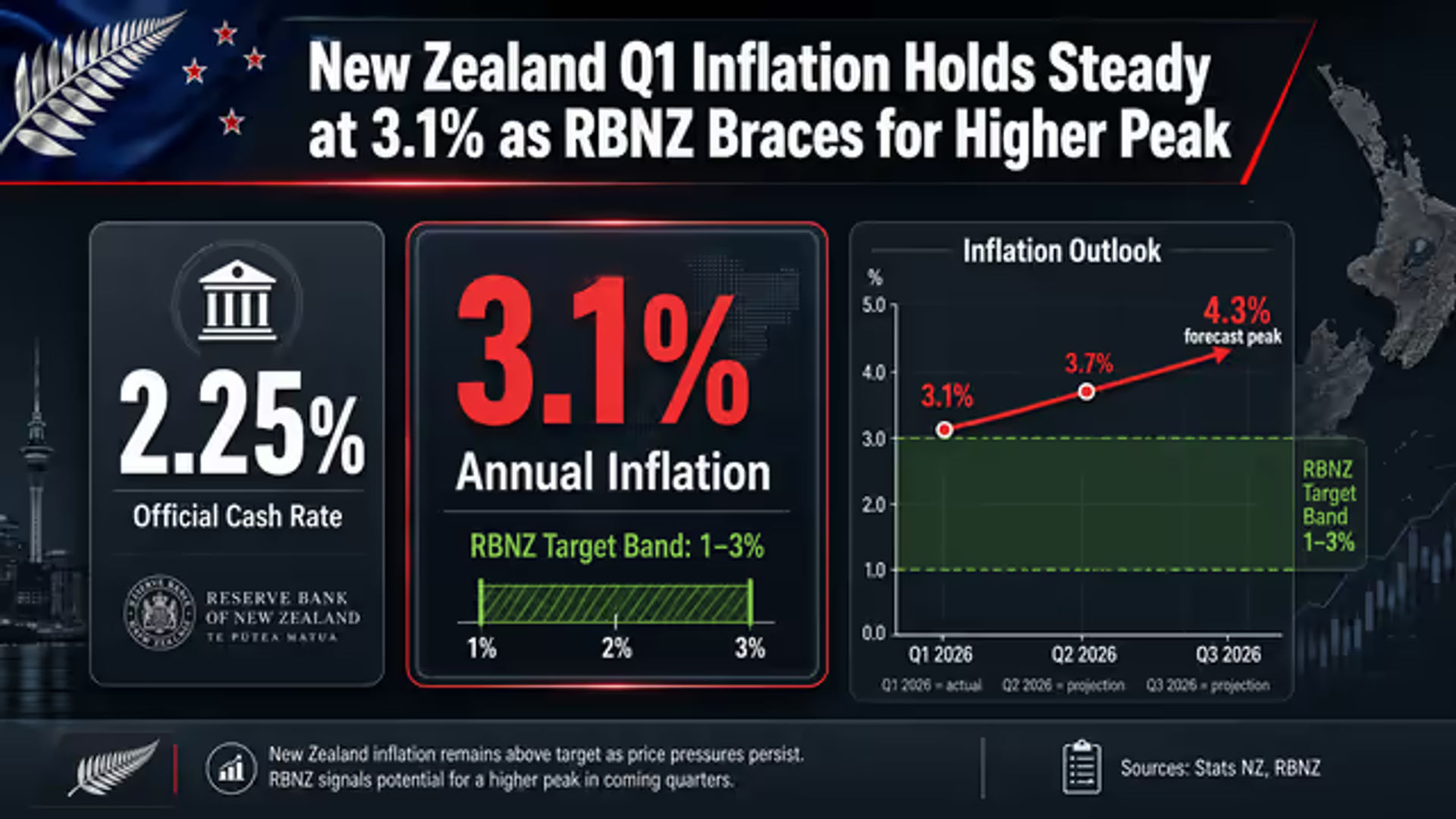
While the capital programme represents a significant funding commitment, The Treasury New Zealand has updated its macroeconomic forecasts, reflecting near-term headwinds. The GDP growth forecast for 2026/27 has been cut to , down from the previous projection of 3.4%. Inflation is projected to peak at in , indicating that cost-of-living pressures will persist through the middle of the year before moderating.
Related Articles

Comments
0Loading...
No comments yet. Be the first to share your thoughts.

