New Zealand Government Increases Rates Rebate Scheme to Support Low-Income Homeowners
The New Zealand Government has confirmed an expansion of the Rates Rebate Scheme, a move designed to provide direct financial relief to low-income homeowners and seniors facing persistent cost of living challenges. Effective from July 1, 2026, the maximum rebate available to eligible ratepayers will increase from $805 to $830. This adjustment is part of a broader effort by the New Zealand First-National coalition to mitigate the impact of rising council rates and essential household expenses on vulnerable populations.
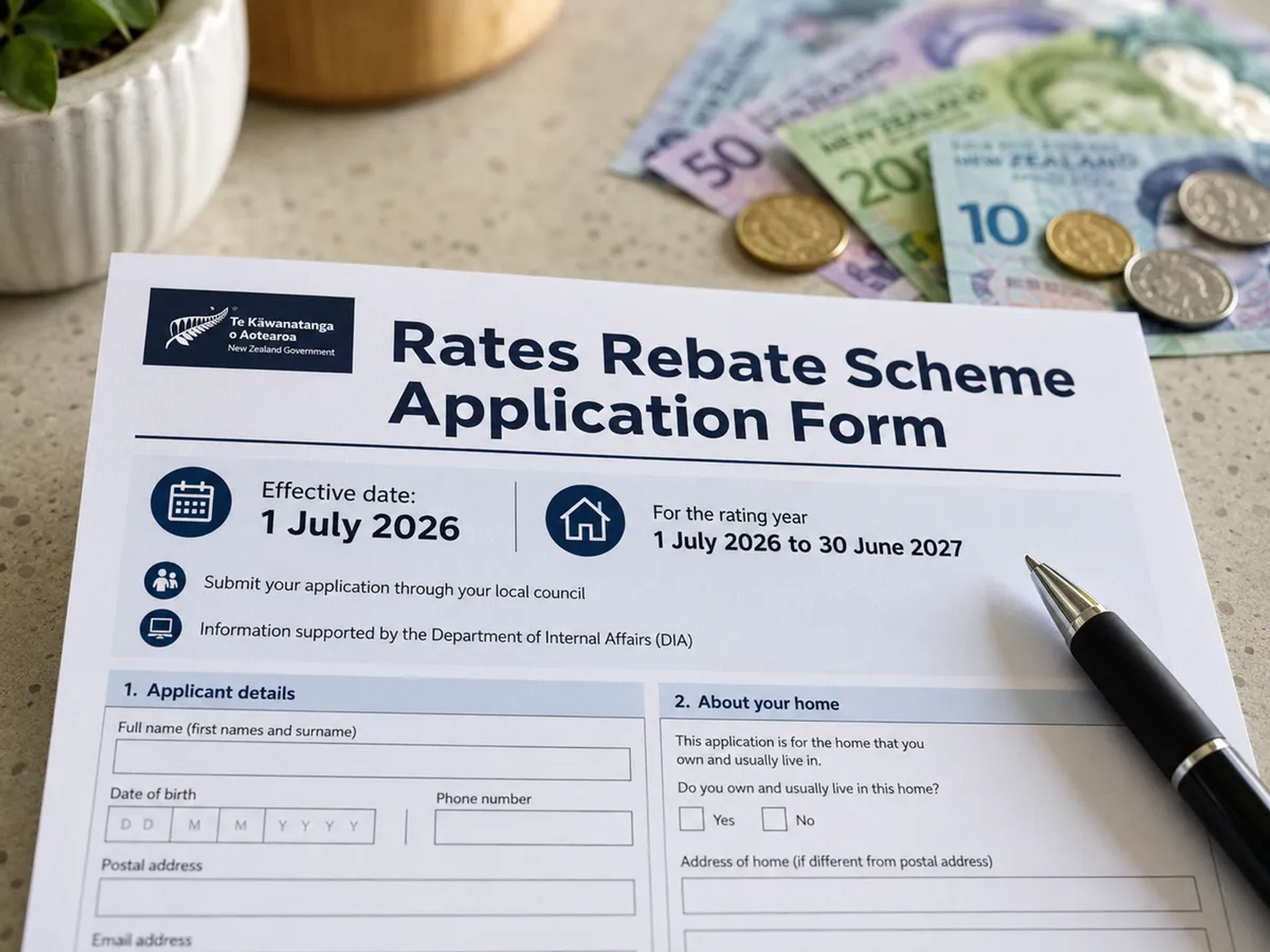
Local Government Minister Simon Watts and Seniors Minister Casey Costello announced the initiative on May 7, 2026, highlighting the necessity of targeted support as household budgets remain under pressure. The scheme, administered by the Department of Internal Affairs (DIA), serves as a critical safety net for those on fixed incomes, ensuring that the burden of local government taxation does not lead to financial hardship for those with limited means.
Revised Income Abatement Thresholds
Central to the update are significant changes to the income abatement thresholds, which determine the level of support a household can receive before the rebate begins to diminish. For the 2026/27 financial year, the government has implemented a tiered approach to these thresholds to better reflect the specific economic realities of different demographic groups.
For SuperGold Cardholders, the income abatement threshold will rise from $45,000 to $46,400. This marks the second rating year that separate income abatement threshold eligibility changes for this group have been in effect, following initial funding in the 2025 budget. This specific focus on seniors ensures that those relying on fixed retirement incomes are not disadvantaged by general inflationary trends. For all other eligible ratepayers, the income abatement threshold will increase from $32,210 to $33,210.
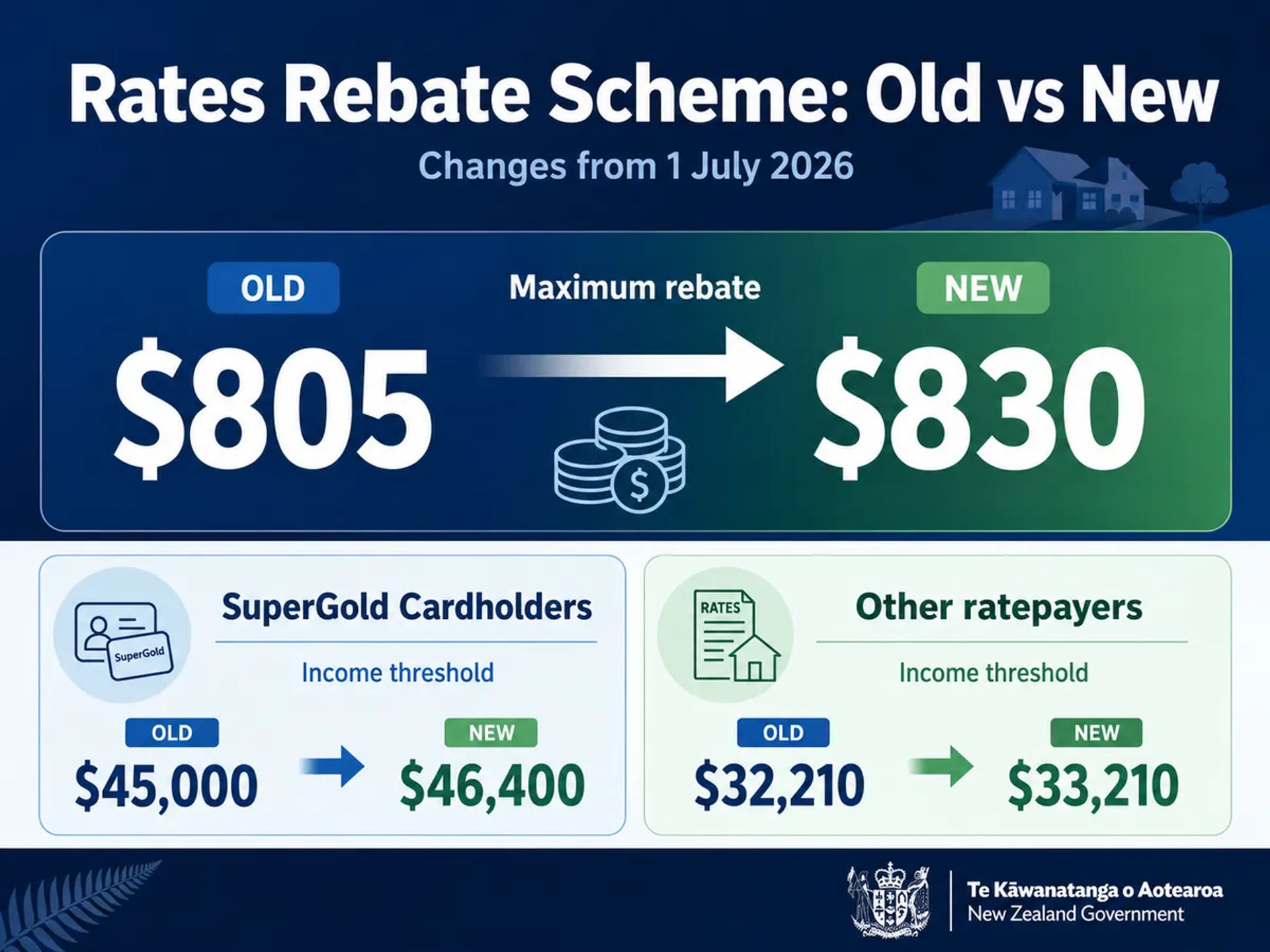
These adjustments are designed to ensure that more New Zealanders remain eligible for the full or partial rebate despite modest increases in their gross income. The policy specifically targets those whose rates bills constitute a disproportionate percentage of their annual earnings. Under the revised rules, SuperGold Cardholders earning only NZ Superannuation, with annual rates exceeding $2000, will be eligible for the full maximum rebate of $830.
Economic Context and Living Costs
The decision to bolster the Rates Rebate Scheme follows a period of sustained financial pressure for New Zealand households. Economic data from November 2025 indicated that a significant portion of the population was facing substantial stress, with food, electricity, and housing costs—including local council rates—identified as the primary drivers of financial anxiety. While some households reported a slight recovery in financial confidence entering 2026, the underlying costs of essential services have continued to climb.
By March 2026, household living costs in New Zealand had risen by 2.1% over the preceding twelve months. This increase was largely attributed to higher prices for petrol, pharmaceuticals, and electricity. Although falling interest payments provided some relief for mortgage holders, those on fixed incomes or in debt-free housing, such as many seniors, did not benefit from these offsets, making the increase in council rates more acutely felt.
Related Articles

Comments
0Loading...
No comments yet. Be the first to share your thoughts.