
Prime Minister Christopher Luxon Signals Fiscal Discipline with $2.1 Billion Operating Spending Cap
Prime Minister Christopher Luxon announced on May 13, 2026, that the New Zealand Government will adhere to a strict regime of fiscal discipline for the upcoming Budget 2026. Delivering a pre-Budget speech to BusinessNZ, the Prime Minister confirmed that net operating spending on new initiatives will be capped at $2.1 billion NZD. This figure represents a significant tightening of the fiscal belt, coming in at $300 million NZD less than the initial $2.4 billion NZD allowance established in the Budget Policy Statement 2026 released in December 2025. This reduction reflects a strategic decision to rebuild the nation's financial buffers in response to heightened global volatility and a recent fuel crisis that has impacted the domestic economy.

The decision to lower the operating allowance is supported by what the government describes as significant savings found across various agencies for the third consecutive year. The ACT Party has claimed that these efforts have resulted in operating savings totalling $1 billion NZD over a four-year period. These savings are being redirected to ensure that essential services remain funded while the government pursues a return to an operating surplus by the 2028/29 fiscal year. Finance Minister Nicola Willis is scheduled to deliver the full details of Budget 2026 on May 28, 2026, which will further outline the path toward reducing public debt to a target of around 40% of GDP.
Shift Toward Capital Investment
While operating expenditure is being constrained, the government is simultaneously expanding its commitment to long-term assets. The net capital package for Budget 2026 has been increased to $5.7 billion NZD, a substantial rise from the $3.5 billion NZD allowance previously set in December 2025 for the years 2026, 2027, and 2028. This capital investment is intended to address critical gaps in the nation's infrastructure and essential services. The New Zealand Government has identified health, education, defence, law and order, and infrastructure as the primary beneficiaries of this funding surge.

By prioritising capital over day-to-day operating costs, the administration aims to build greater resilience against future global shocks. The Prime Minister emphasised that the increased capital package is a necessary step to modernise the country's foundations while maintaining a cautious approach to recurring spending. This dual-track strategy—tightening operational costs while expanding infrastructure investment—is designed to navigate a challenging economic landscape characterised by geopolitical tensions and supply chain disruptions.

Economic Outlook and Global Pressures
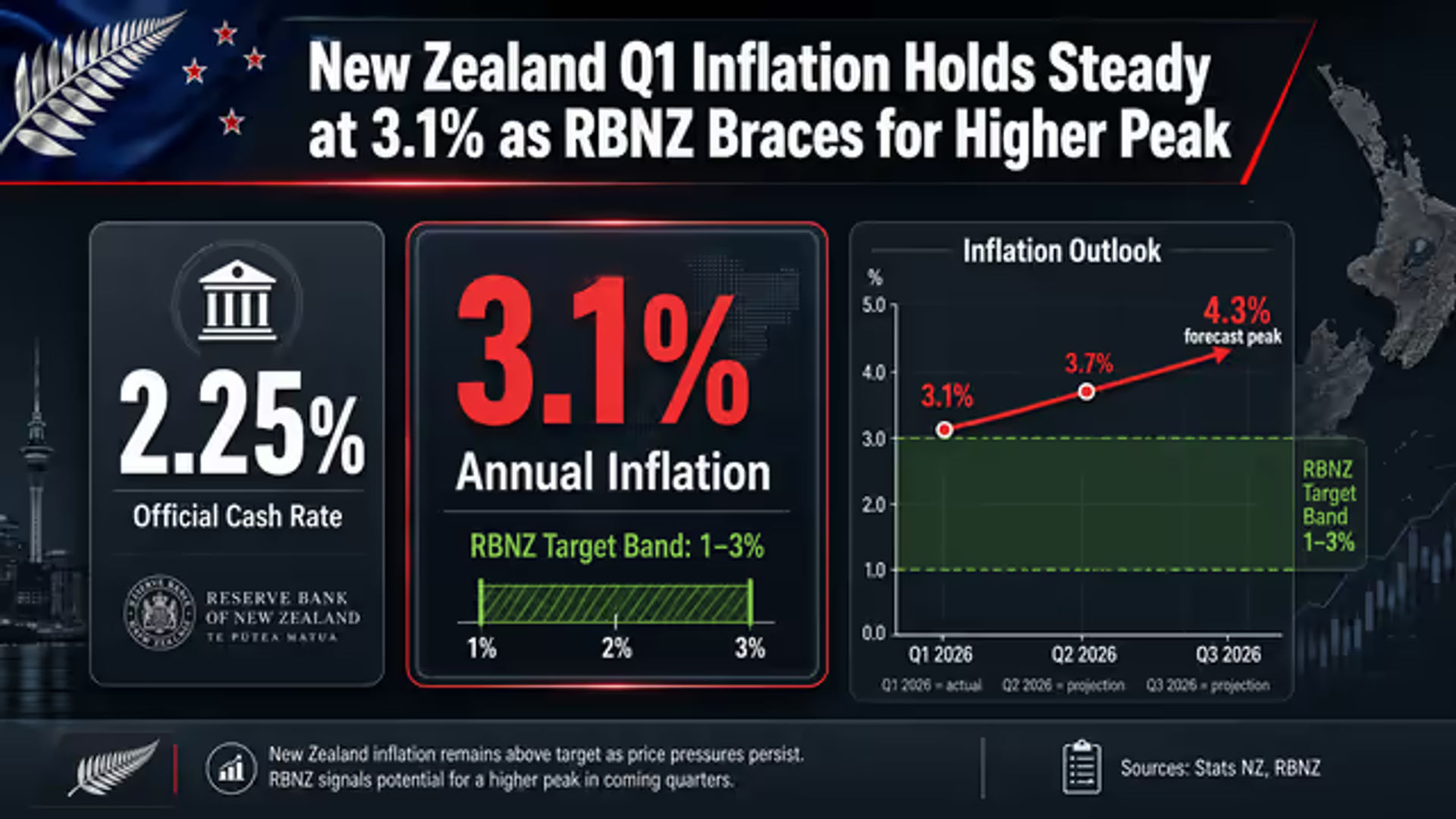
The fiscal strategy for Budget 2026 is set against a backdrop of cooling economic activity. Westpac's revised growth forecast currently sits at 1.5%, reflecting the impact of international instability and the recent fuel crisis on the New Zealand economy. The Treasury New Zealand has been monitoring these developments closely as the government seeks to balance the need for public investment with the necessity of fiscal sustainability. The cautious approach to the operating allowance is a direct response to these external pressures, with the government seeking to avoid inflationary pressures that could arise from excessive public spending.
Related Articles

Comments
0Loading...
No comments yet. Be the first to share your thoughts.
