Westpac Releases Downbeat June 2026 Consumer Update Highlighting Spending Slowdown and OCR Hikes
A significant slowdown in consumer spending and persistent inflationary pressures are steering the New Zealand economy into a subdued period of economic activity. The newly released Consumer Update June 2026, published by Westpac New Zealand on the NZX at 10:21 NZST on June 11, 2026, presents a downbeat assessment of the domestic economy. Faced with rising living costs and escalating geopolitical uncertainties, households have markedly pulled back on retail purchases, while headline inflation remains poised to stay elevated.

In May 2026, per-person retail spending on Westpac-issued debit and credit cards in New Zealand decreased by -0.3% after seasonal adjustments. This monthly contraction highlights a wider trend of cooling demand across the country. Total spending on Westpac-issued cards grew by just +0.7% in the three months to May 2026, representing a notable deceleration from the quarterly gains of 2% to 3% observed during the earlier months of the year, pointing to a rapid weakening in domestic economic momentum.
Structural Shifts in Household Spending
The composition of consumer card transactions reflects a stark reallocation of household budgets. Escalating essential expenses have forced consumers to prioritise necessary commodities over discretionary travel and leisure activities. For instance, card transactions reveal a recent increase of ~19% in spending on fuel, driven by rising global energy prices.
Conversely, non-essential sectors are experiencing severe downturns. Travel spending has recorded a recent drop of ~10%, as families defer holidays and focus their resources on daily living requirements. This shift in spending patterns illustrates how rising costs are constraining discretionary household budgets and squeezing domestic retail businesses.
Sinking Consumer Confidence and Labour Market Weakness
This tightening of household purse strings aligns with a substantial decline in domestic consumer sentiment. The Westpac McDermott Miller Consumer Confidence Index fell to 94.70 points in Q1 2026, a drop from the 96.50 points recorded in Q4 2025. This deterioration in confidence indicates growing consumer caution, exacerbated by geopolitical friction such as the Middle East conflict and the tangible impact of rising fuel costs on weekly household budgets.

At the same time, the domestic labour market is showing signs of cooling. The New Zealand unemployment rate is anticipated to rise from its current levels to reach a peak of 5.6%. A weakening labour market is expected to compound the drop in consumer confidence, further suppressing domestic retail demand as employment security softens.
Persistent Inflation and the Monetary Policy Response
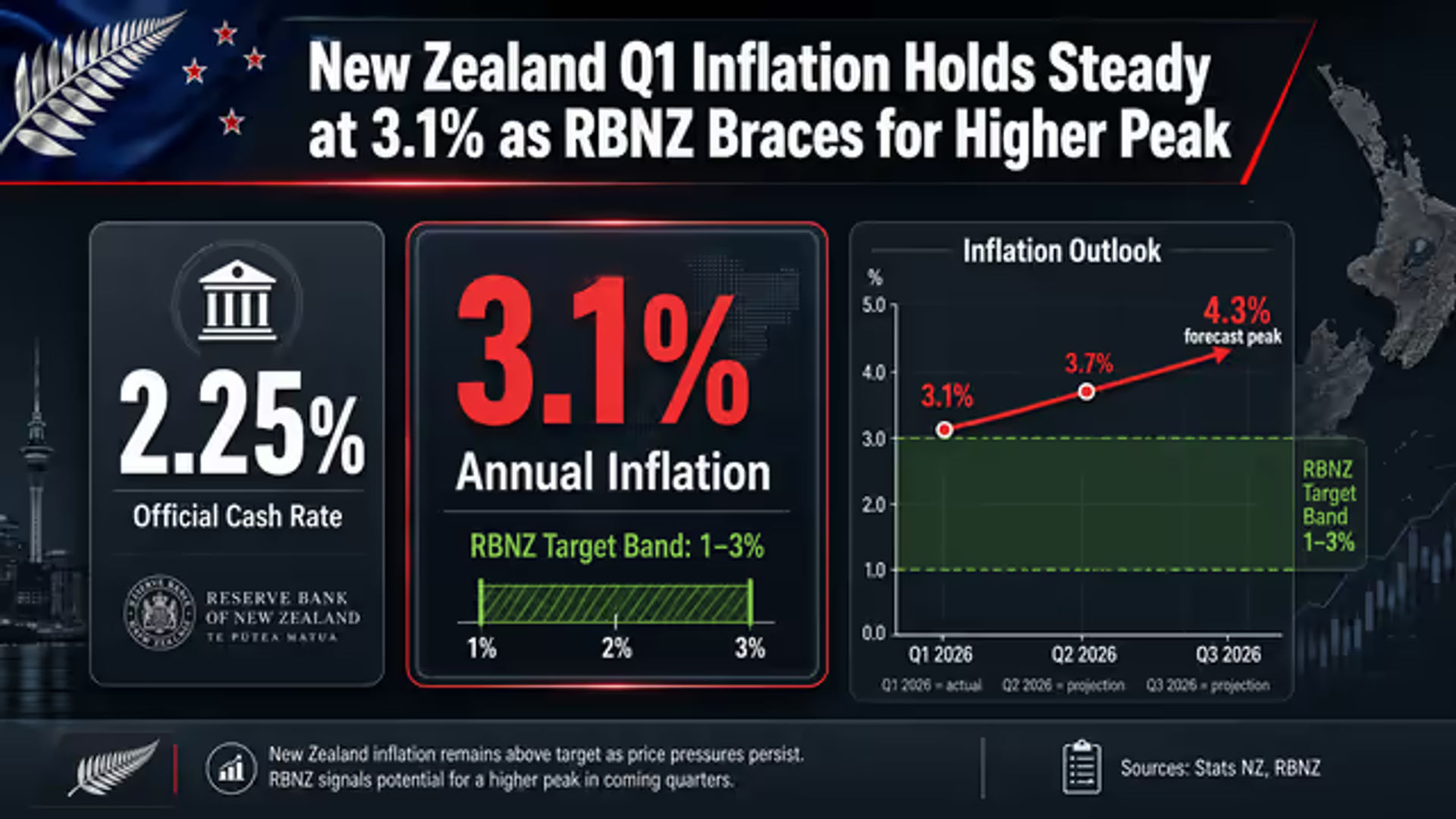
Despite the slowdown in economic activity and the projected rise in unemployment, inflation remains a persistent challenge for monetary authorities. While the annual New Zealand Consumer Price Index (CPI) was recorded at 3.1% in March 2026, headline inflation is forecast to remain comfortably >4% for the remainder of 2026.

Related Articles
Comments
0Loading...
No comments yet. Be the first to share your thoughts.
