Australian Wage Growth Remains Steady as Annual Rate Moderates to 3.3 Per Cent
The Wage Price Index for the March quarter 2026 increased by 0.8% on a seasonally adjusted basis, maintaining a consistent pace of growth for the third consecutive quarter. This latest data, released on May 13, 2026, shows that annual wage growth in Australia has reached 3.3%, representing a slight moderation from the 3.4% recorded in the December quarter 2025. The results largely align with broader market expectations and provide a clear picture of the labour market's role in the current inflationary environment.
Quarterly wage growth has now remained at 0.8% since the September quarter of 2025, indicating a period of stability in how wages are adjusting across the economy. This steady growth persists despite significant shifts in monetary policy and broader economic conditions. Sue-Ellen Luke, the Australian Bureau of Statistics (ABS) head of prices statistics, noted the consistency of the quarterly figures and the largely unchanged annual rate.
"The quarterly growth of 0.8 per cent has remained consistent since the September quarter of 2025, and the annual rate of growth remains largely unchanged from the previous quarter."
Sectoral Performance and Public Sector Leadership
A divergence between the private and public sectors continues to characterise the Australian labour market. Annual private sector wage growth for the year to March 2026 was 3.2%, a marginal decrease from the 3.3% growth seen in the same period a year earlier. In contrast, public sector wages grew by 3.3% annually to March 2026. While this is a reduction from the 3.6% annual growth recorded in the previous year, the public sector has now outpaced the private sector in wage growth for five consecutive quarters.
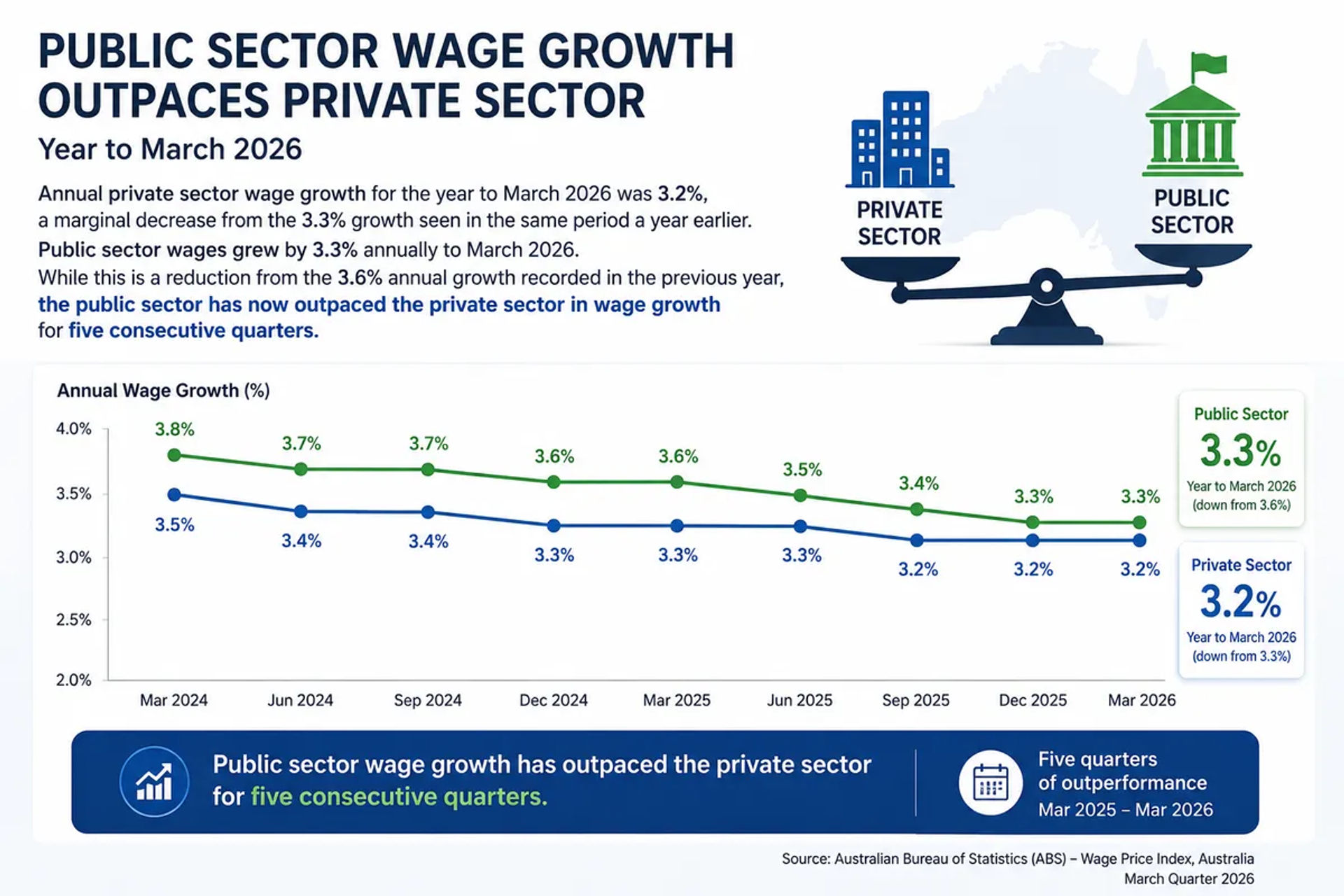
The sustained strength in public sector wages is partly attributed to the timing of various state-based agreements and federal initiatives. This trend highlights a shift from the post-pandemic period where private sector wages initially led the recovery. The current alignment of both sectors around the 3.3% mark suggests a broad-based stabilisation of wage pressures across the national economy.
Industry Drivers and Government Initiatives
The Healthcare and Social Assistance industry emerged as the primary contributor to wage growth during the March quarter 2026, with wages in this sector rising by 0.7%. This growth was driven by specific policy interventions and industrial agreements aimed at addressing workforce shortages and cost-of-living pressures in essential services.
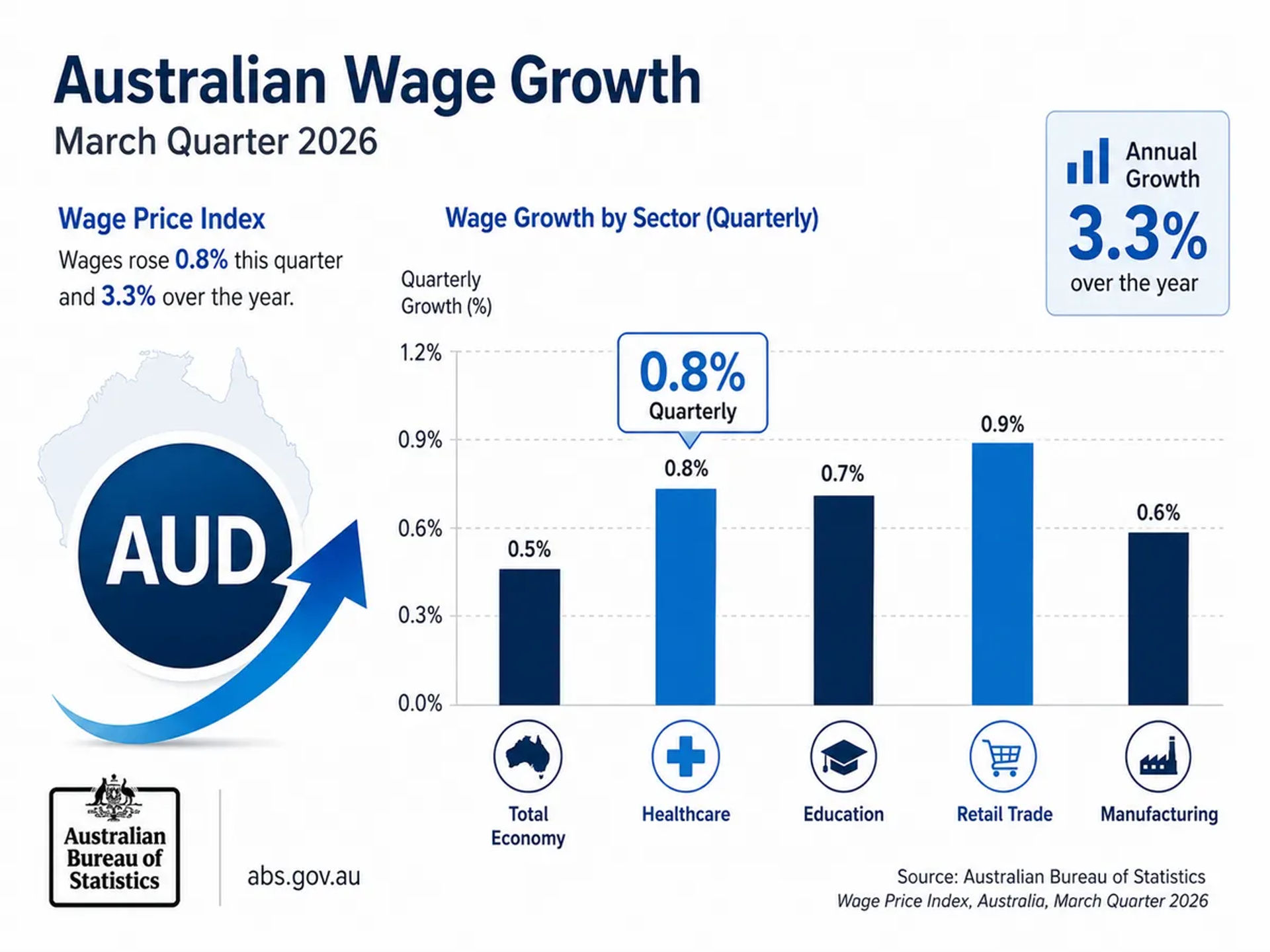
In the private sector, a significant driver was the Commonwealth-funded initiative for the Early Childhood Education and Care (ECEC) workforce. This programme provided targeted wage increases for childcare workers, reflecting a broader government strategy to support the sector. Simultaneously, the public sector saw substantial contributions from wage rises awarded to Queensland hospital healthcare workers. These specific adjustments in the healthcare and education sectors have provided a floor for wage growth, ensuring that essential service workers receive adjustments in line with broader economic trends.
Related Articles

Comments
0Loading...
No comments yet. Be the first to share your thoughts.