
Air New Zealand Revises FY26 Outlook Downward Following Surge in Jet Fuel Costs
Air New Zealand has revised its financial outlook for the 2026 financial year, now anticipating a loss before taxation in the range of $340 million to $390 million. The announcement, made on May 14, 2026, marks a significant shift in the airline's profitability expectations, driven primarily by a substantial increase in global jet fuel prices. This revision follows a period of heightened geopolitical tension in the Middle East, which has disrupted energy markets and forced the national carrier to adjust its operational and financial strategies.
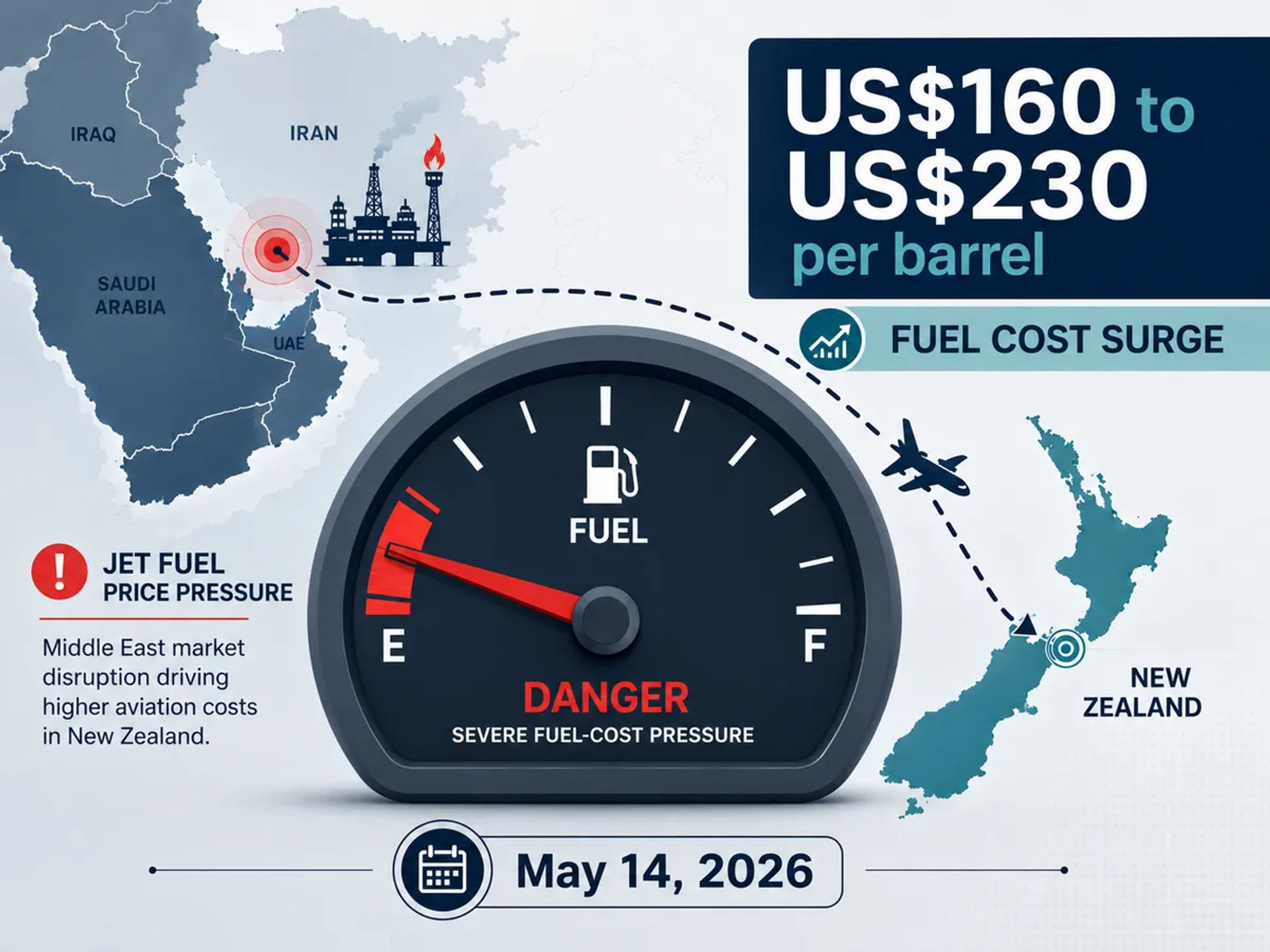
The primary driver for the downgrade is a $240 million headwind in jet fuel costs for FY26. Prior to the conflict in the Middle East, jet fuel was trading in a range of US$85-US$90 per barrel. However, recent market volatility has seen prices surge to between US$160 and US$230 per barrel. Consequently, Air New Zealand's estimated fuel cost for the second half of FY26 has been adjusted to $980 million, representing a 32% increase from the $740 million initially assumed. The airline is now basing its current forecast on an Assumed Average Jet Fuel Price (2H26) of US$145 per barrel.
Mitigation Strategies and Operational Adjustments
In response to the escalating costs, Air New Zealand is implementing a series of mitigation actions designed to offset the financial impact. These measures, which have an estimated value of Approximately $70 million, include three targeted capacity consolidations. These adjustments will reduce the group's overall capacity by 3% to 5%. Additionally, the airline has confirmed that fare increases will be applied across its network to help recover the increased cost of operations.
Beyond immediate operational changes, the company has identified Up to $100 million in annualised cost savings intended for FY27 and beyond. These long-term efficiencies are part of a broader effort to stabilise the airline's financial performance following a challenging period. In February 2026, the airline reported a H1 FY26 Pre-tax Loss of NZ$59 million, which followed an initial guidance in August 2025 suggesting earnings would be similar to or less than the NZ$34 million recorded in the second half of the previous year. For context, the airline achieved a FY25 Profit Before Taxation of NZ$189 million.
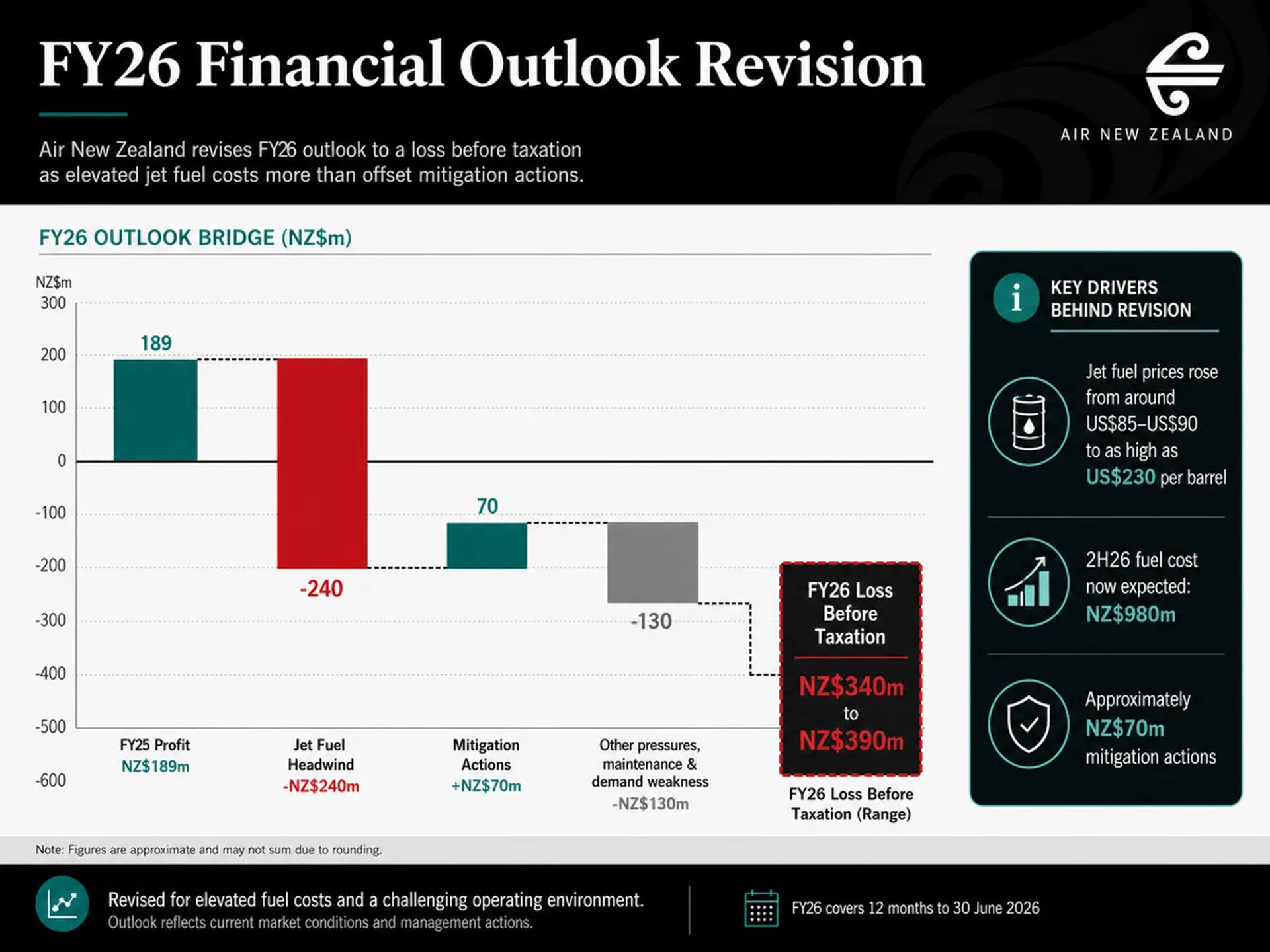
Operational resilience is expected to improve as the airline's fleet returns to full strength. All Boeing 787 aircraft are scheduled to return to service by late June 2026, which is anticipated to enhance aircraft availability and reduce the reliance on more expensive short-term solutions. However, the airline continues to face other financial pressures, including Approximately $50 million in Unexpected Leased Engine Maintenance Costs and Approximately $12 million in Lower Engine Compensation.
Market Reaction and Credit Position
The financial markets reacted to the outlook revision on the NZX. As of May 13, 2026, the Air New Zealand share price fell by 1.15% to $0.430. During late morning trading on the day of the announcement, shares saw a further decline of almost 3.5%. Despite the projected loss, the airline maintains a strong liquidity position, reporting in available liquidity. This includes a . The company has stated it is not currently considering any capital transactions or immediate capital raising.
Related Articles


Comments
0Loading...
No comments yet. Be the first to share your thoughts.