
ANZ Shares Face Scrutiny After Rough Week for Australian Banks Amid Budget and RBA Outlook
ANZ Group Holdings shares are facing significant scrutiny on Monday, 18 May 2026, following a 4.3% decline in the previous week. This downward pressure on ANZ and other major Australian financial institutions stems from a sharper policy and credit backdrop influenced by recently announced federal budget measures and the latest interest rate hike from the Reserve Bank of Australia. The banking sector is currently being re-evaluated as economic conditions evolve, particularly regarding household credit and mortgage demand in the wake of significant tax reforms and persistent inflation.
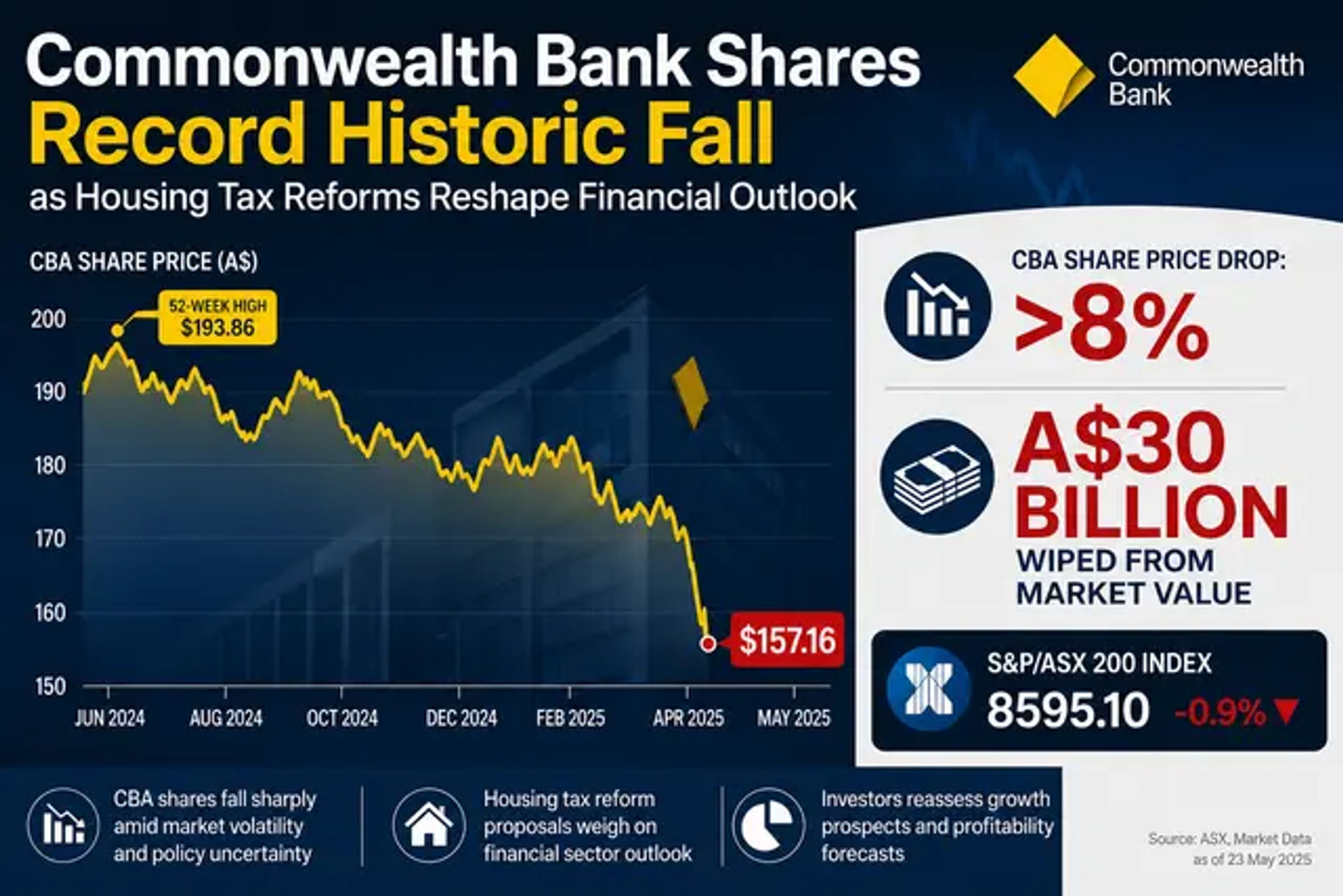
The volatility in the sector was underscored on Wednesday, 13 May 2026, when Commonwealth Bank of Australia suffered its largest one-day fall on record. The bank lost nearly A$30 billion in market value as its share price plummeted 10.4%. This record loss followed the delivery of the Australian Federal Budget on 12 May 2026, which introduced structural changes to property taxation that are expected to have a direct impact on the lending environment. Investors reacted to both the budget announcements and an increase in risk provisions set aside by the bank for Middle East-related risks.
Federal Budget Reforms and Housing Impact
The Australian Treasury detailed significant reforms to negative gearing and capital gains tax in the budget. Under the new rules, negative gearing for residential property will be limited to new builds, while the existing 50% capital gains tax discount will be replaced with cost base indexation and a 30% minimum tax rate. These changes, which apply to properties acquired after 7:30 PM AEST on 12 May 2026, are designed to influence housing supply but have introduced immediate uncertainty for property investors.

Analysis suggests these tax reforms will reduce established dwelling prices by approximately 3% relative to what they would otherwise have been. For major lenders like ANZ Group Holdings, National Australia Bank, and Westpac Banking Corp, these changes signal a potential slowdown in mortgage growth. Experts from Morgan Stanley anticipate that the shift in the tax treatment of residential property will directly impact bank revenues as the demand for established property loans softens. The full weight of these negative gearing and capital gains tax changes is scheduled to apply from 1 July 2027.
Monetary Policy and Inflationary Pressures
Compounding the fiscal changes is the ongoing tightening of monetary policy. On 5 May 2026, the Reserve Bank of Australia increased the official cash rate by 25 basis points to 4.35%. This represented the third consecutive rate hike in 2026, a move necessitated by persistent inflation and robust domestic demand. Following the decision, the four major banks confirmed plans to pass on the 25 basis point increase to borrowers, leading to higher mortgage repayments across the country.

Related Articles

Comments
0Loading...
No comments yet. Be the first to share your thoughts.

