New Zealand House Prices Projected to Decline as Interest Rates Rise
The New Zealand residential property market is entering a period of renewed contraction, with major financial institutions revising their outlooks to reflect a projected 2% decline in NZ house prices over 2026. This shift marks a significant departure from earlier expectations of growth, as high inventory levels and rising interest rates create a challenging environment for sellers and homeowners alike.
ANZ economists have revised the New Zealand house price forecast for 2026 from an initial 2% increase to a 2% decline. This adjustment follows a period of marginal growth, including a 0.8% rise in house prices in the three months to March. However, the broader momentum has stalled, with house sales in March falling by 4.6%. Other major lenders have followed suit in lowering their expectations for the year. Westpac economists now anticipate a 1% decline in NZ house prices over 2026, a sharp reversal from their previous forecast of a 4% increase. Meanwhile, ASB and BNZ have both adjusted their outlooks to a 0% change in NZ house prices over 2026, effectively predicting a flat market for the remainder of the year.

Monetary Policy and Mortgage Pressures
The Reserve Bank of New Zealand (RBNZ) Financial Stability Report, issued on May 5, 2026, indicates that while house prices have remained largely flat for the past three years, the upward trajectory of mortgage rates is likely to trigger further reductions. The RBNZ is expected to implement three Official Cash Rate (OCR) hikes this year to combat persistent inflationary pressures. These increases are projected to commence in July 2026, with subsequent hikes expected in September 2026 and December 2026.
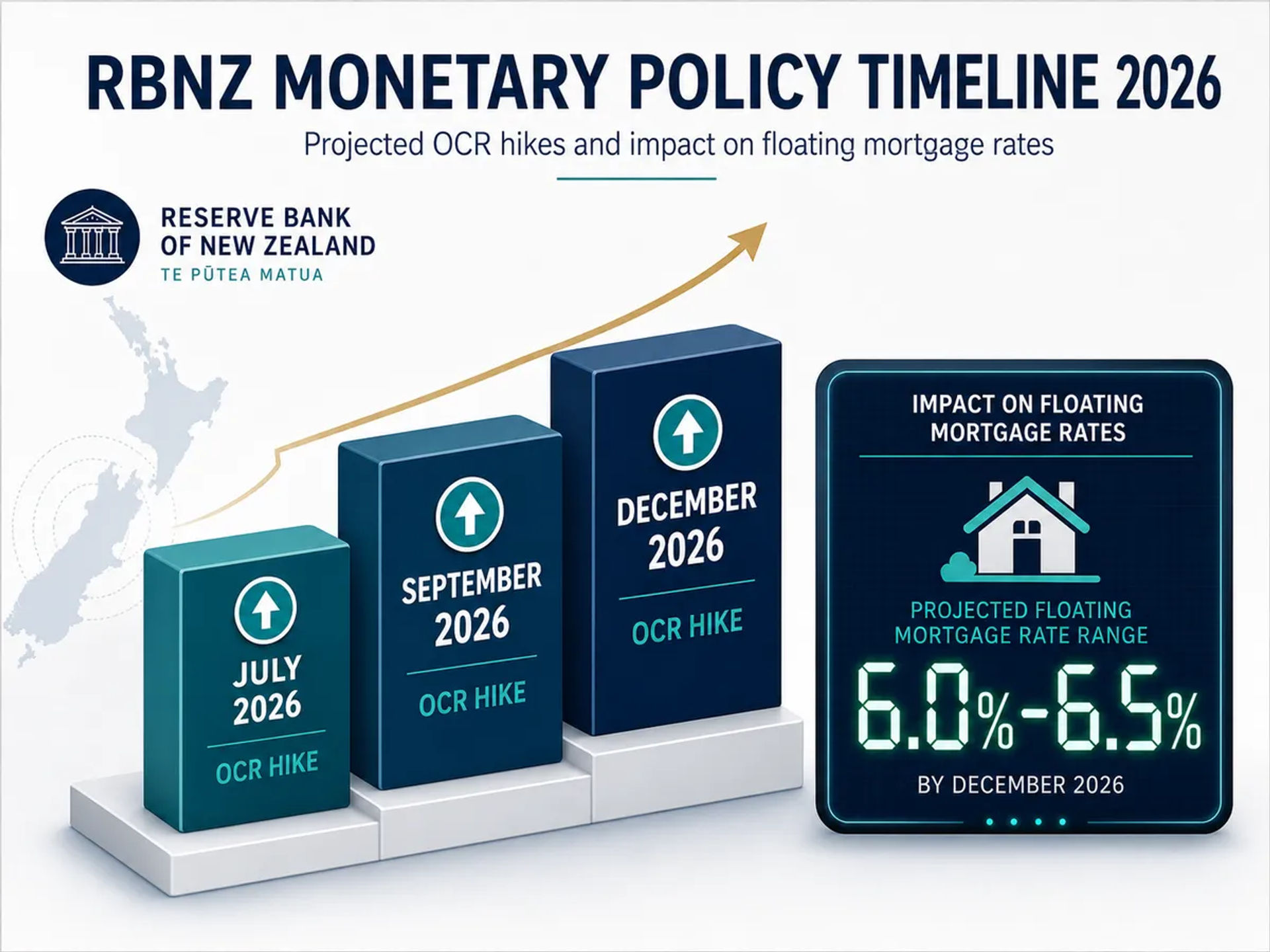
As a result of these policy shifts, BNZ Chief Economist Mike Jones expects 6.0-6.5% floating mortgage rates by year-end. These higher servicing costs are arriving at a time when the market is already heavily supplied, further impacting household finances amid a slowing economic recovery. The transition to higher interest rates is expected to weigh heavily on demand, as the cost of debt-servicing increases for both existing homeowners and prospective buyers.
Supply Dynamics and Buyer Activity
New Zealand's housing inventory has reached an 11-year high, contributing to a definitive buyer's market that is particularly pronounced in Auckland and Wellington. The accumulation of stock on the market has significantly altered the negotiation power between buyers and sellers. With inventory at its highest level in over a decade, the urgency that characterised previous market cycles has been replaced by a more cautious approach from purchasers.
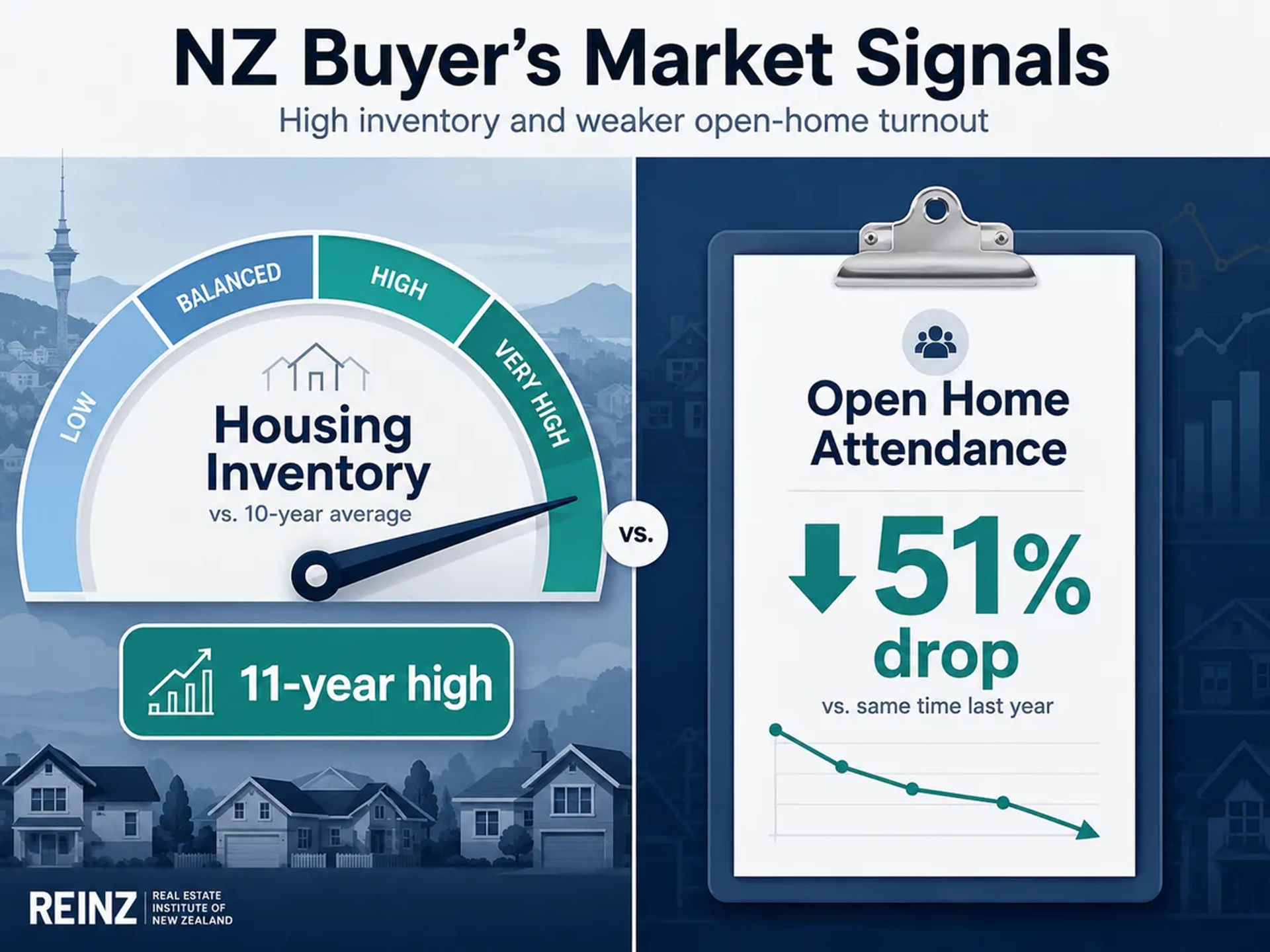
Market sentiment among frontline professionals reflects this transition. In May 2026, 44% of real estate agents perceived that prices are falling in their local areas. This represents the most pessimistic sentiment recorded since 2022. Furthermore, a net reported fewer attendees at open homes, the lowest level of engagement seen since early 2022. , CEO of mortgage brokers, identifies several catalysts for the expected price reductions:
Related Articles
Comments
0Loading...
No comments yet. Be the first to share your thoughts.