
ASX 200 Records Tenth Consecutive Day of Losses as Inflation Fears Mount
The Australian share market has extended its downward trajectory, recording its tenth consecutive day of losses as persistent inflation and geopolitical instability weigh heavily on investor sentiment. On April 30, 2026, the S&P/ASX 200 index declined by 0.4%, closing at 8,652.1 points. This marks the longest losing streak for Australian equities since mid-June 2022, highlighting a period of sustained caution across the financial sector.
Inflation Hits Multi-Year Highs
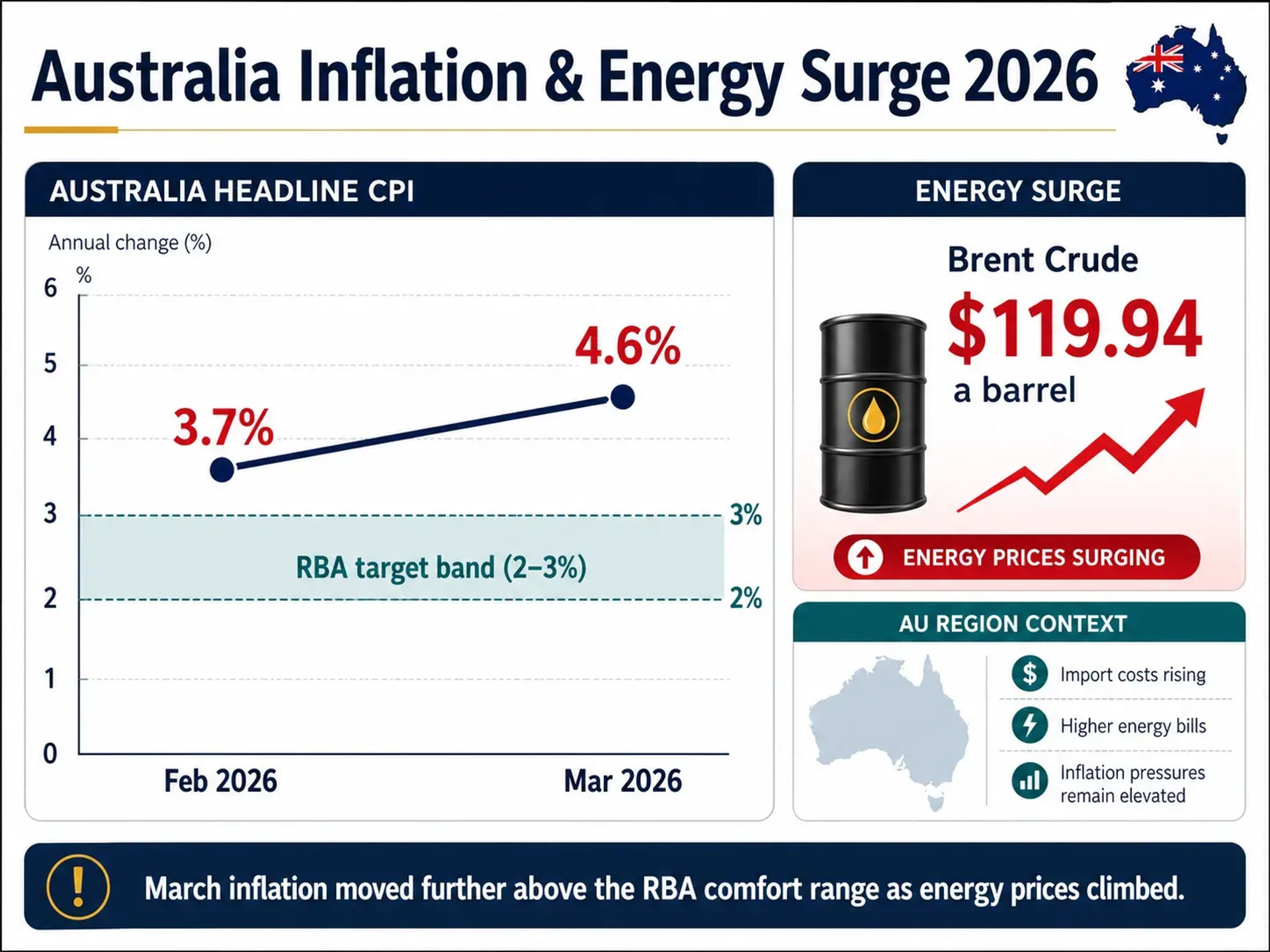
The primary driver of the current market volatility is a sharper-than-expected rise in domestic inflation. Data released on April 29, 2026, revealed that Australia’s headline Consumer Price Index (CPI) surged to 4.6% annually in March, a significant jump from the 3.7% recorded in February. This represents the highest inflation level since September 2023, largely propelled by a 37% month-on-month increase in fuel prices.
Of particular concern to policymakers is the Reserve Bank of Australia’s (RBA) preferred measure of underlying inflation. The trimmed mean CPI increased by 0.8% in the first quarter of 2026, bringing the annual rate to 3.5%. This remains stubbornly above the RBA’s target band of 2% to 3%, complicating the central bank’s path forward as it attempts to balance price stability with economic growth.
The Energy Crisis and Geopolitical Headwinds
The inflationary impulse is inextricably linked to the ongoing conflict in the Middle East, which began on February 28, 2026. The conflict, involving the United States and Iran, led to the closure of the Strait of Hormuz, a critical maritime corridor that facilitates approximately 20% of the world’s global oil supply. Although a ceasefire was announced on April 8, 2026, shipping traffic remains significantly below pre-war levels, maintaining upward pressure on energy costs.
On April 30, Brent crude oil futures for June delivery rose to $119.94 a barrel. This is a stark contrast to the $70 per barrel levels seen before the outbreak of hostilities in late February. The World Bank, in its Commodity Markets Outlook released on April 28, projected that energy prices will surge by 24% across 2026. The bank now expects Brent oil to average $86 a barrel for the year, a substantial revision from the $69 average seen in 2025.
RBA Rate Hike Expectations
Financial markets have reacted swiftly to the confluence of high inflation and energy supply shocks. Market pricing now indicates a 70% to 72% probability that the RBA will implement a 25-basis point interest rate hike at its upcoming May meeting.
This potential tightening of monetary policy comes at a sensitive time for the Australian economy. While higher rates are a standard tool for curbing inflation, they also increase the debt-servicing burden on households and can dampen corporate investment. The RBA now faces a "tightrope walk," needing to address the real inflationary impulse from the Middle East conflict without pushing the domestic economy into a deeper slowdown.
Global Economic Softening
Australia’s market woes are reflected in a broader global context. The International Monetary Fund (IMF) has projected that global growth will slow to 3.1% in 2026 and 3.2% in 2027. The IMF cited the Middle East war, rising commodity prices, and tighter financial conditions as the primary factors behind this deceleration.
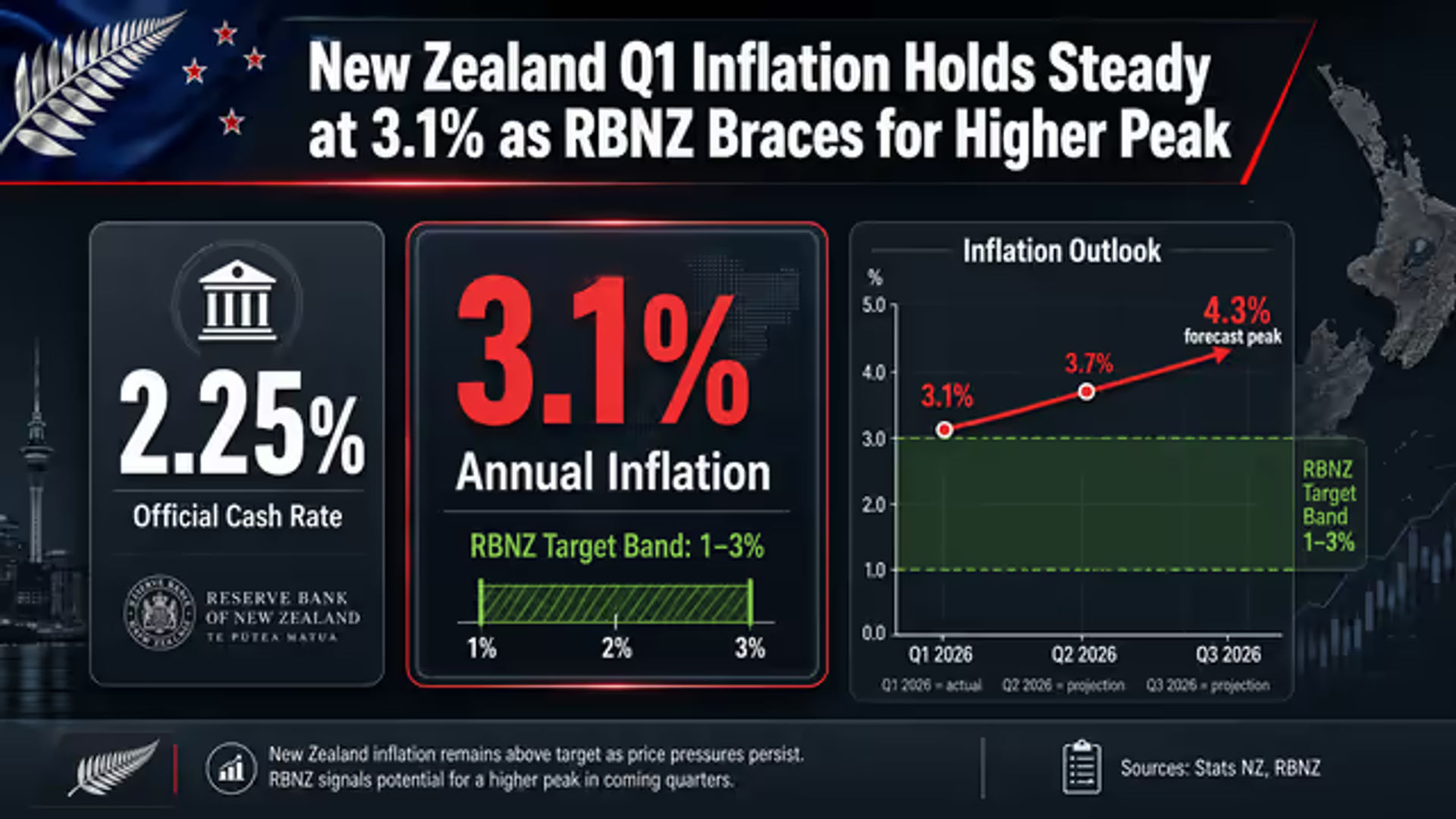
For New Zealand and Australian investors, the ten-day losing streak on the ASX 200 serves as a significant indicator of heightened economic anxiety. While the S&P/NZX 50 has shown more resilience in the immediate term, the open nature of the New Zealand economy means it is unlikely to remain insulated from global commodity volatility and supply chain disruptions. Historically, prolonged downturns of this nature, such as those witnessed in 2019 and 2025, have led to significant wealth destruction and periods of protracted economic uncertainty.
Related Articles

Comments
0Loading...
No comments yet. Be the first to share your thoughts.
